
Earlier this month, SPECIAL team member Wenyao Gan had the opportunity to attend the ICCS summer school in Cambridge. The ICCS summer school was an inspiring and intensive programme that did far more than just teach technical skills. Designed and hosted by the Institute for Computing for Climate Science (ICCS), the school brought together an interdisciplinary group of researchers, software engineers, and climate scientists to explore the intersection of computing and climate science.
Aims of the Summer School
The ICCS summer school was built around a clear and ambitious goal: to provide hands-on training in research software engineering (RSE), machine learning, high-performance computing (HPC), and scientific programming, while fostering collaboration across disciplines. In addition to structured workshops, participants had the chance to engage in one-on-one discussions with ICCS RSE staff to receive targeted code support.
Learning That Goes Beyond the Technical
One of the most impactful aspects of the summer school was the emphasis on good coding practices within scientific research. Through the RSE Skills workshops, participants were able to explore version control, modularity, and code testing, skills that are critical for developing robust, reusable, and reproducible scientific software.
Technical highlights included:
- Basic machine learning implementation using PyTorch
- Git and GitHub workflows for collaborative development
- Fundamentals of differentiable programming and HPC
- Practical debugging techniques

Figure 1: Presentation at the ICCS summer school
When asked what her main takeaway was from the summer school, Wenyao shared:
“This summer school didn’t just teach techniques, it inspired me to look at things from a research software engineering perspective.”
Influence on Future Work
The summer school has already started to shape the way Wenyao approaches her work. The tools and workflows explored, particularly those related to version control, collaborative coding, and automated testing, will directly contribute to improving the reproducibility and robustness of her research. Exposure to emerging techniques like FTorch, differentiable programming, and AI-enhanced software engineering opened up exciting new directions for future projects, especially in climate and computational science.
Highlights
Among the many excellent sessions, the keynote by Prof. Tamsin Edwards was a particular highlight. Her talk on sea level rise projections for the IPCC covered the use of Gaussian Process emulation, Bayesian calibration, and improvements for IPCC AR7 projections. This talk demonstrated the real-world impact of applied computational science in climate research.
An Exceptional Setting
The ICCS summer school was held at the University of Cambridge providing participants an opportunity to enjoy the summer school in this unique and historic setting. Formal dinners, visits to Madingley Hall and Sidney Sussex College, a walking tour of the city and a poster session provided informal networking opportunities.


Image 2: The sights of Cambridge, left, an intricate ceiling seen on campus and right, one of the formal dinners Wenyao attended during the summer school.
It was great to see other members of the LEMONTREE project (one of the projects the SPECIAL team are heavily involved in) attending the ICCS summer school as well.
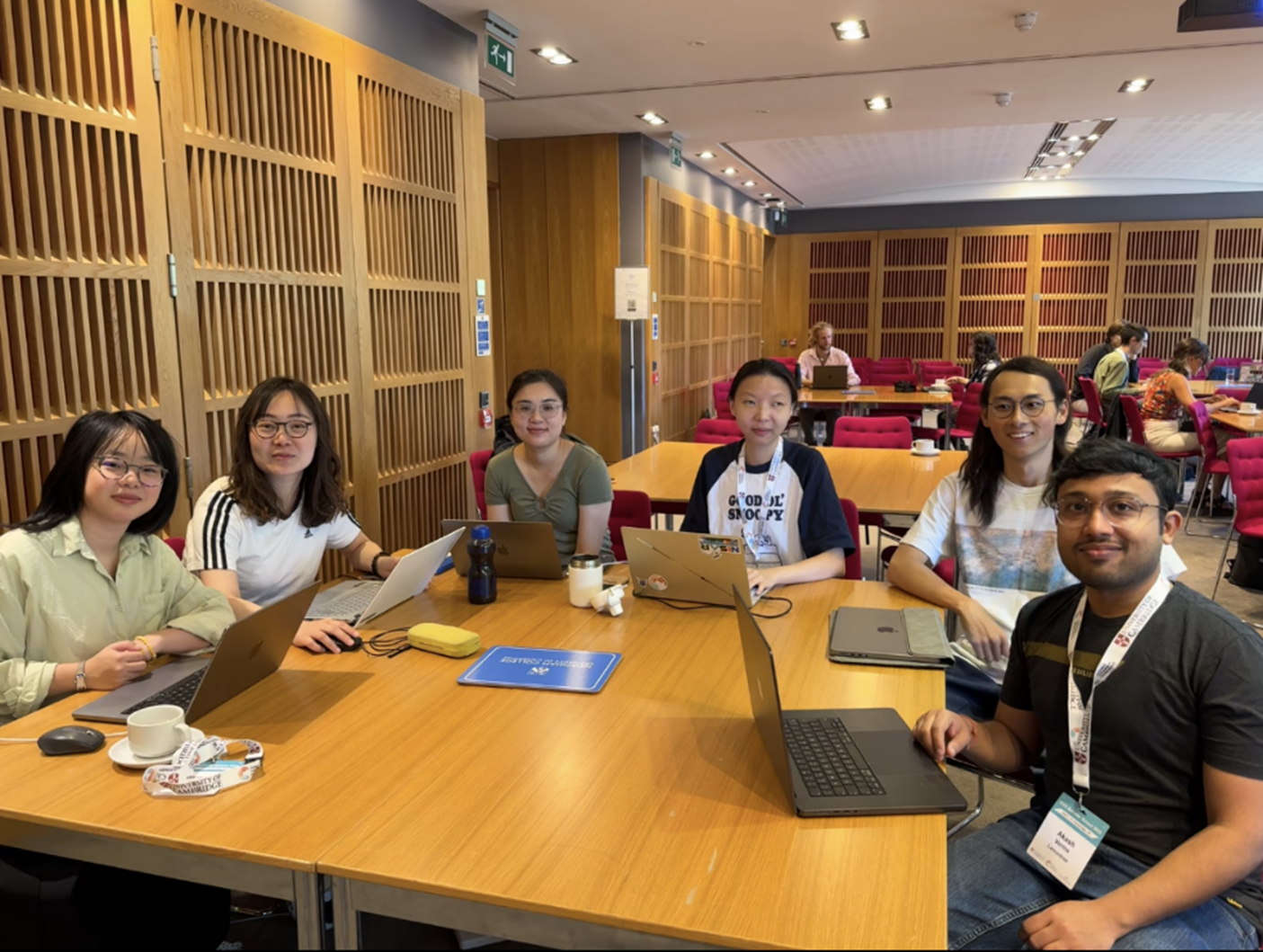
Image 3: ECRs of the LEMONTREE project attending the ICCS summer school. From left to right: Wenyao Gan, Boya Zhou, Ruijie Ding, Wenjia Cai, Yuzhi Zhu and Akash Verma.
Final Thoughts
The ICCS summer school was not only a technical bootcamp but also offered a new perspective on research software engineering. It offered new tools, inspired new thinking, and built new networks. We are grateful to the ICCS for running this summer school and for giving a number of LEMONTREE early career researchers the opportunity to attend.
Written by Wenyao Gan and Sophia Cain