
Research overview
Studying Britain’s refugee history from 1930 to present day provides insight from different refugee movements
Ellen explains, ‘If you want to understand the full picture of Britain’s relationship with refugees, you have to start at the beginning and end at the end. Therefore, in this research project we will examine the story of how we got where we are.’
Our research focuses on the past 100 years of Britain’s refugee history. During this time, the global landscape has changed significantly with the end of European empires and the collapse of the Soviet Union, to name just two major examples. New State borders have been drawn and re-drawn. Yet globalisation, air travel, and new communication technologies have connected people across borders more than ever before in world history.
The significant geographical and political shifts in this period have resulted in large numbers of displaced people fleeing danger around the world. Though Britain has by no means received the most people, it is a good place from which to explore the international phenomenon of people seeking refuge, due to its historical global connections and the significant role it has played in the development of international legal frameworks. The number of claims for asylum in Britain have also increased in recent years, and the topic has become increasingly politicised. There is a pressing need for a greater understanding of this complex issue and its historical roots.
We’ve divided this 100-year history into 3 time periods or ‘strands’:
- 1930s -1950s
- 1960s -1990s
- 2000 – present day
Each strand has its own distinct history and significance for the research. Within each strand, we examine various refugee movements in detail to unpick the complexity of Britain’s relationship with refugees (and, later, ‘asylum-seekers’) over time.
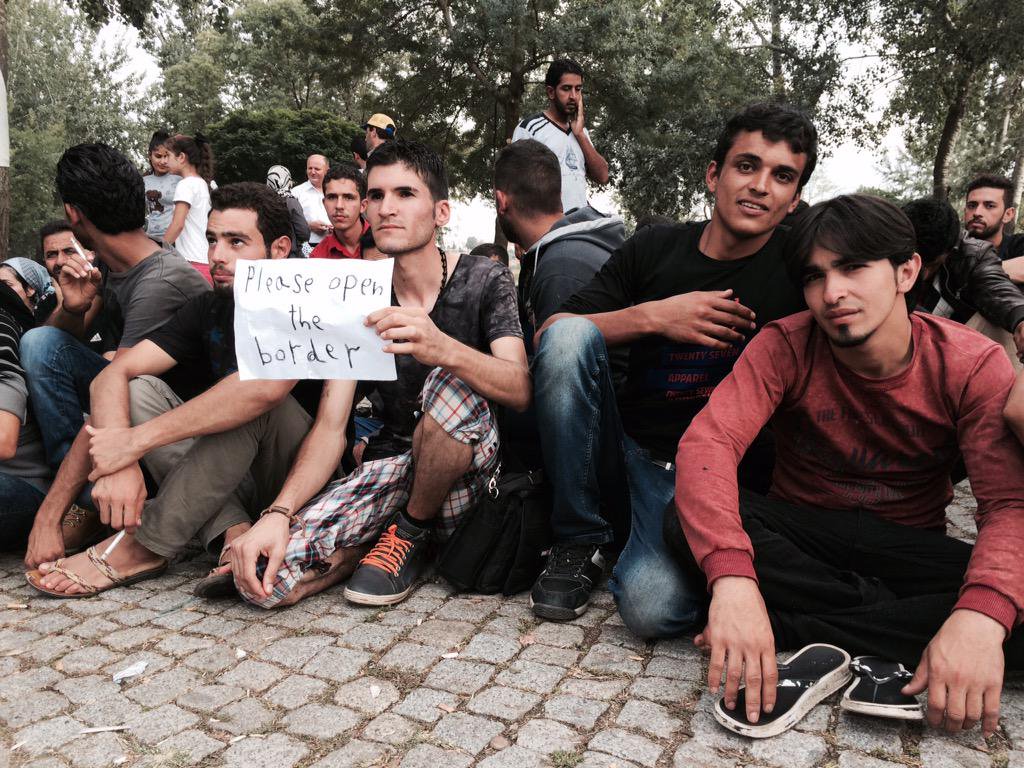
Our research framework
Each time period is a specific focus of our project. We also have cross-cutting research questions which are illustrated in the framework below.
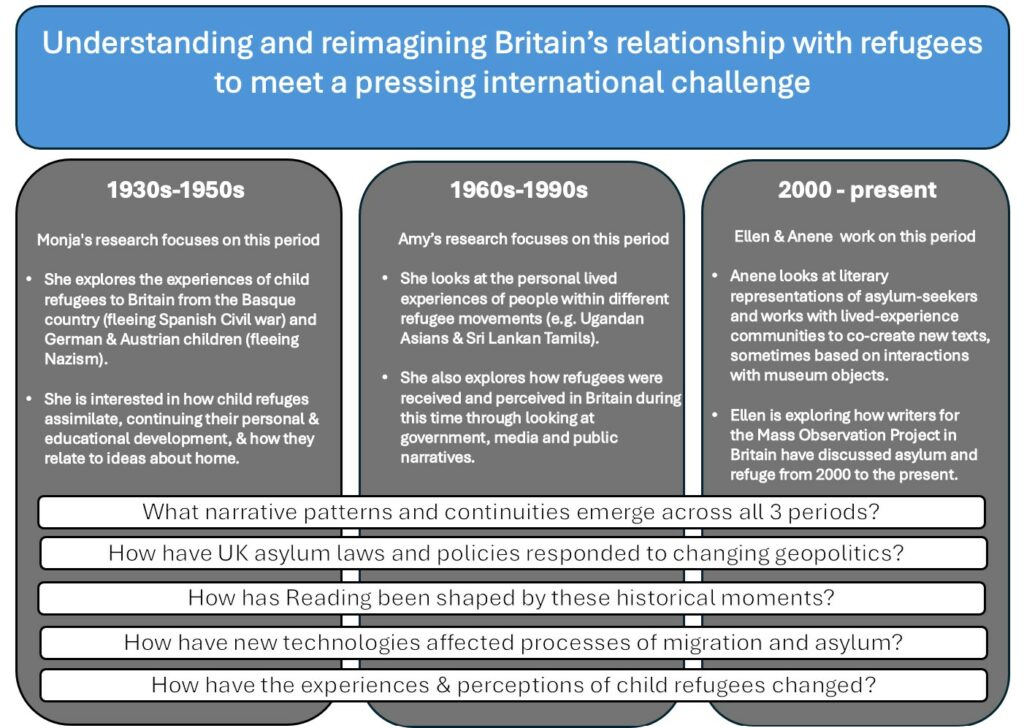
Three main questions to guide our Nation of Refuge research
1. How has the British (a) cultural, social and technological context and (b) legal frameworks and policies on refugees evolved over time and why?
We’ll examine and chart how and why the legal frameworks were created and developed. Also, how state actors (e.g. the Home Office & local authorities) developed and enacted policies relating to refugees and asylum-seekers.
We’ll also critically assess how Britain’s cultural, social and technological context has changed across each of the time periods. These factors are likely to have shaped both understanding of and attitudes to immigration, with asylum being a sub-category of immigration.
2. How have refugees been received and perceived between 1930 and present day?
We’ll explore a range of perspectives, including the lived experience of refugees and the extent and the nature of the welcome given to them by British communities and institutions. It’s through bringing together a range of perspectives that we can understand and appreciate the complexity of Britain’s relationship with refugees over time.
3. How can we best understand and reimagine Britain’s relationship with refugees?
As academics, it is not our job to dictate laws and policies. What we can do is to help policy-makers and the wider public understand the complexity of this issue, examining the evidence, so that decisions can be made for the future that express chosen ethical values while taking past and present realities into account. We need to understand how we got here before we can work out where we want to go next.
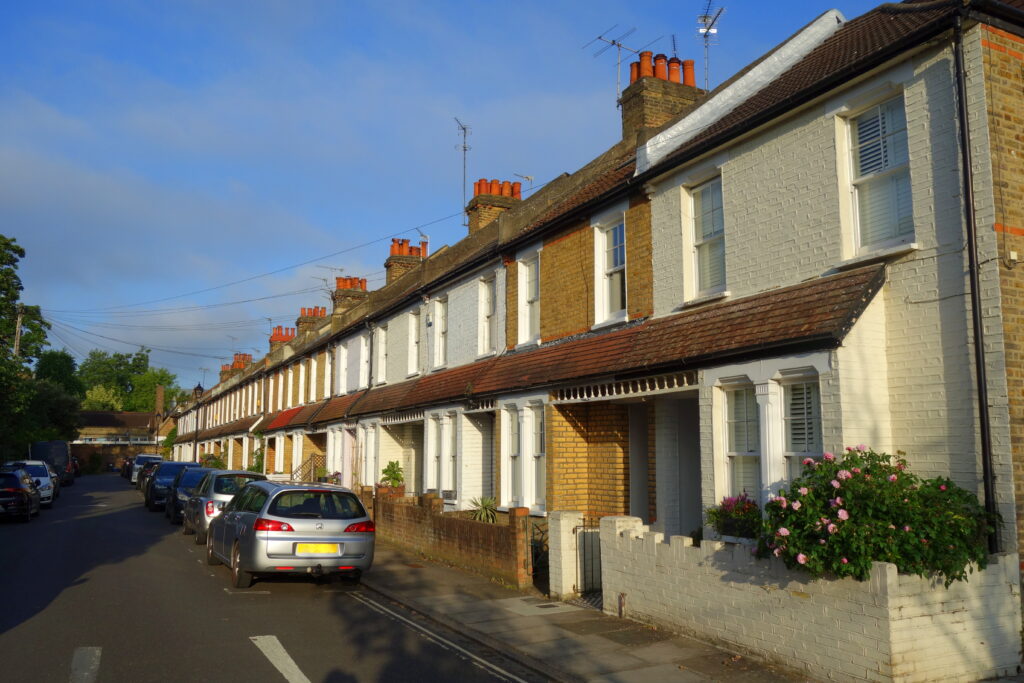
We’re examining three time periods, each with a distinct history and relevance
Within each strand we study different refugee movements in detail. We recognise that as well as each movement being distinct from other movements, even individual experiences within a single group will differ considerably. We try to respect and reflect both group and individual diversity in our research, including in history, tradition, culture and experiences.
- 1930s -1950s: Child and young refugees
- 1960s -1990s: Ugandan-Asian refugees & Tamil refugees
- 2000 – present day: contemporary refugees
A mixed methods approach will help us to understand Britain’s complex relationship with refugees
We’re using a range of research methods and examining different perspectives to understand the intricacies of Britain’s relationship with refugees.
Each researcher brings to the project different methodological expertise, including linguistic and discourse analysis, archival research, literary analysis, creative and participatory methods, public engagement, and museums studies.
Find out more about our research