
For the month of July, S.P.E.C.I.A.L group PI Sandy Harrison travelled to China to continue her long-standing relationship with colleagues at Tsinghua University where Sandy is also a Distinguished Visiting Professor. Sandy travels to China every year where she works alongside the team of students and researchers under the supervision of Associate Professor Wang Han.
This year’s fieldwork takes the team to the spectacular Baima Mountains in Yunnan Province, where they are based in a small town about an hour’s drive from Shangri-La.
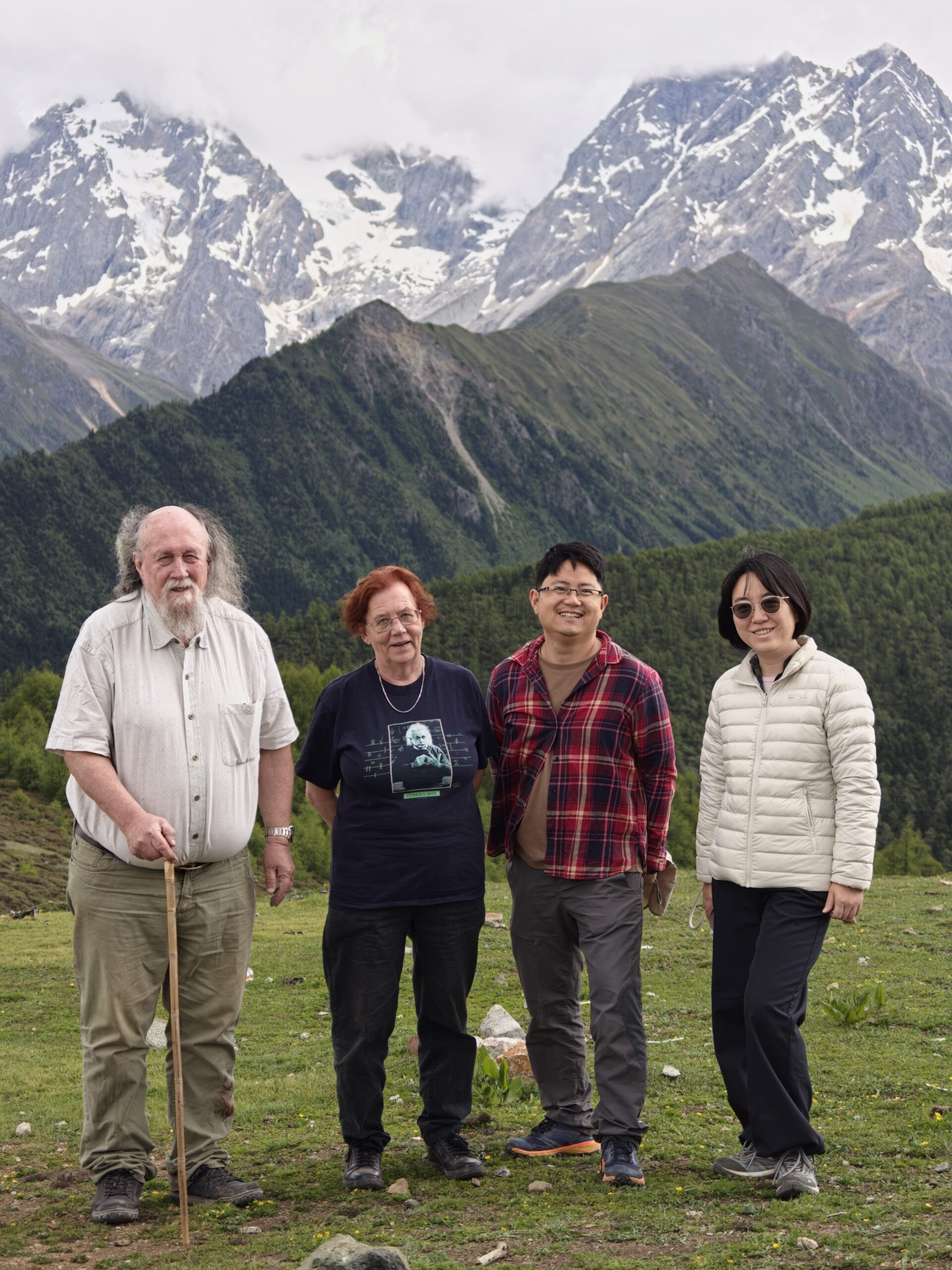
Figure 1: Colin Prentice, Sandy Harrison, Li Meng and Wang Han in the Baima Mountains. Photo credit Jierong Zhao.
Their first day exploring the region confirmed that they had found what Sandy describes as a true smultronstellet – a Swedish expression meaning a “hidden gem” or favourite special place (Sandy would know as she did her PhD at Lund University in Sweden). Appropriately, wild strawberries were growing nearby too!
The region is special due to its dramatic transition in elevation which creates equally dramatic changes in temperature, moisture and growing conditions. For plant scientists, it offers an ideal opportunity to investigate how vegetation adapts to contrasting environments while remaining within the same geographical region.
Over the course of the field campaign the Tsinghua team sampled photosynthetic, hydraulic and fine-root traits from multiple woody species across 10–11 sites along the transect. By measuring these traits together, the researchers aim to understand how plants coordinate carbon uptake, water transport and belowground resource acquisition as environmental conditions change with elevation.
Once returned from the field, the researchers, including Sandy, catalogued a remarkable range of leaf and stem morphological characteristics. Leaf trait recordings include: leaf form, phenology, leaf type, texture, colour, size, thickness, orientation, display, shape, margin, hairiness, pubescence, pruinosity, rugosity, waxiness, hypostomatic characteristics, revolute/involute margins, aromatic and fetid properties, drip tips, terminal notches, surface patterning, succulence, spines, and thorns. Stem traits such as stem form, colour, photographs, hairiness, pubescence, pruinosity, succulence, spines, thorns, and bark characteristics. including bark structure and stem morphology, are also recorded.
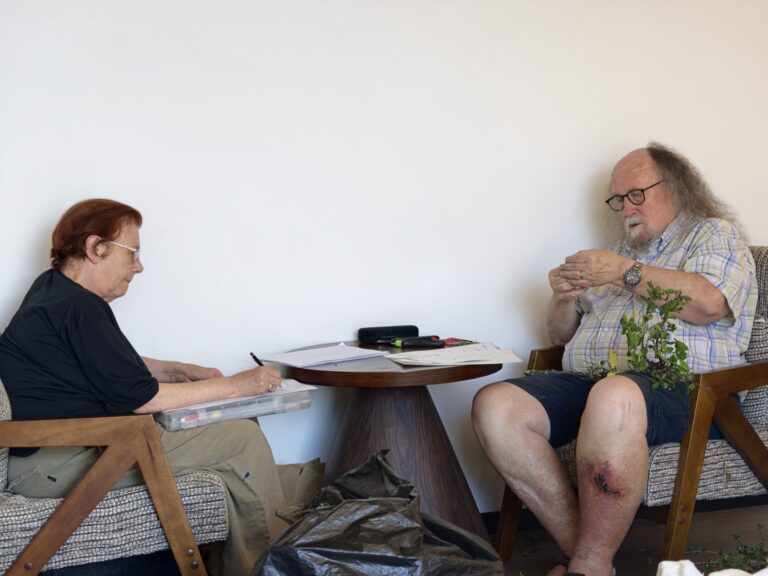
Image 2: Sandy Harrison and Colin Prentice cataloguing plant traits in Chain. Photo credits: Jierong Zhao.
The documentation of plant traits, leaf performance and hydraulic traits help to provide comprehensive information on plant functional morphology and adaptation strategies. This information will inform future work on the LEMONTREE project and help to answer future research questions!
For the full series of blogs on this trip and to hear more in depth about the time in the field you can check out our LEMONTREE project website.
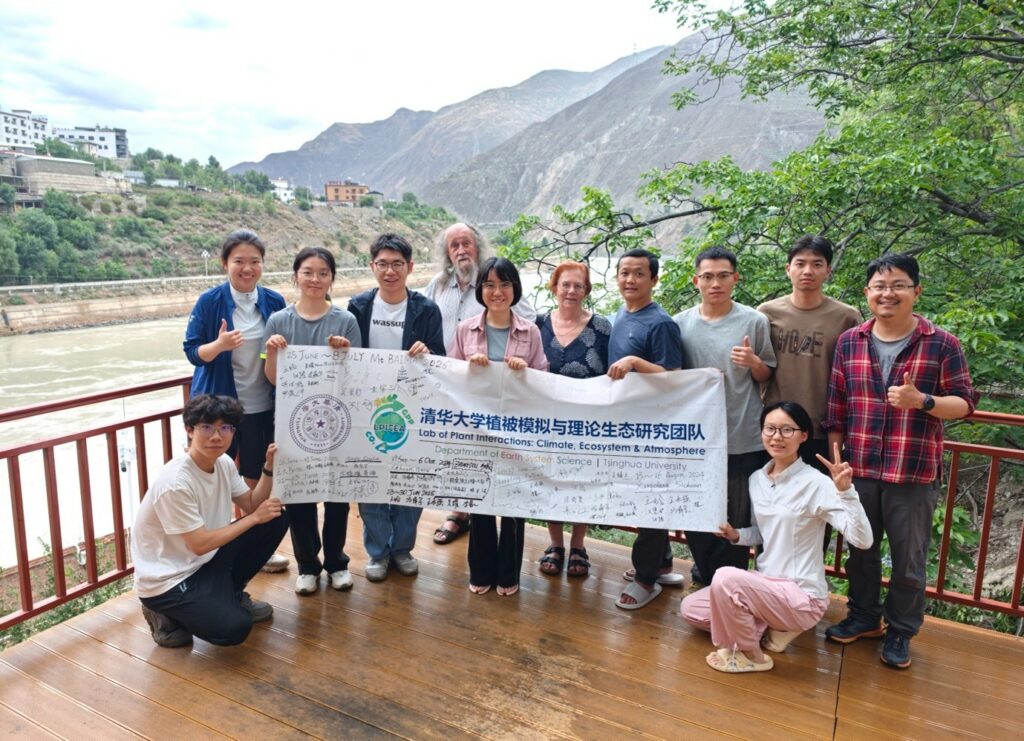
Figure 3: The fieldwork team at Tsinghua University. Left to right: Wu Ruipeng, Zhao Jierong, Zhang Yue, Wu Yao, Colin Prentice, Wang Han, Sandy Harrison, Wu Yangyang, Wu Haobiao, Luo Huangting, Yuan Panli, Li Meng
Blog adapted from post written by Natalie Sanders.