
On the 21st and 22nd July, members of the SPECIAL research group travelled to Imperial College London to attend the Leverhulme Centre for Wildfires, Environment and Society Summer Conference. The SPECIAL team contributes to the Centre’s Giraffe Team focused on fire and vegetation interactions, which is based at the University of Reading. The Centre aims to deliver a step change in the scientific understanding of wildfires through a genuinely interdisciplinary approach, bringing together expertise from a wide range of disciplines. Its research programme is organised into six “Giraffe Teams”, so named because of their “lofty” ambitions. Reflecting this interdisciplinary focus, the conference programme was also structured around six key themes:
- What controls landscape burning, and how can we better anticipate and detect these events?
- How does fire interact with atmospheric composition, the carbon cycle, and climate?
- How to fires impact biodiversity, ecosystem services, and human health and well-being?
- What consequences and trade-offs arise from fire management and preparedness strategies?
- How can fire policymaking and management be made more integrative, equitable and adaptive?
- What futures for fire in the Earth system are plausible – and which should we aim for?
Members of the SPECIAL research group contributed to three presentations at the conference. In Theme A, Imperial College postdoctoral researcher Andrew Clelland presented work from his collaboration with the SPECIAL group. In Theme C, PhD student Chris Ho, who is co-supervised by Professor Harrison, presented his research. In addition, Isidora Xenaki, a PhD student within the SPECIAL research group, showcased a poster on palaeofires.
Andrew presented a recent project to come out of the fire-vegetation interactions Giraffe Team. This study aimed to use machine learning to assess if the drivers of wildfire globally are consistent across temporals scales. The study found that across different temporal scales the drivers do differ, with fuel driving longer term patterns in fire but weather undeniably influencing the shorter timescales.
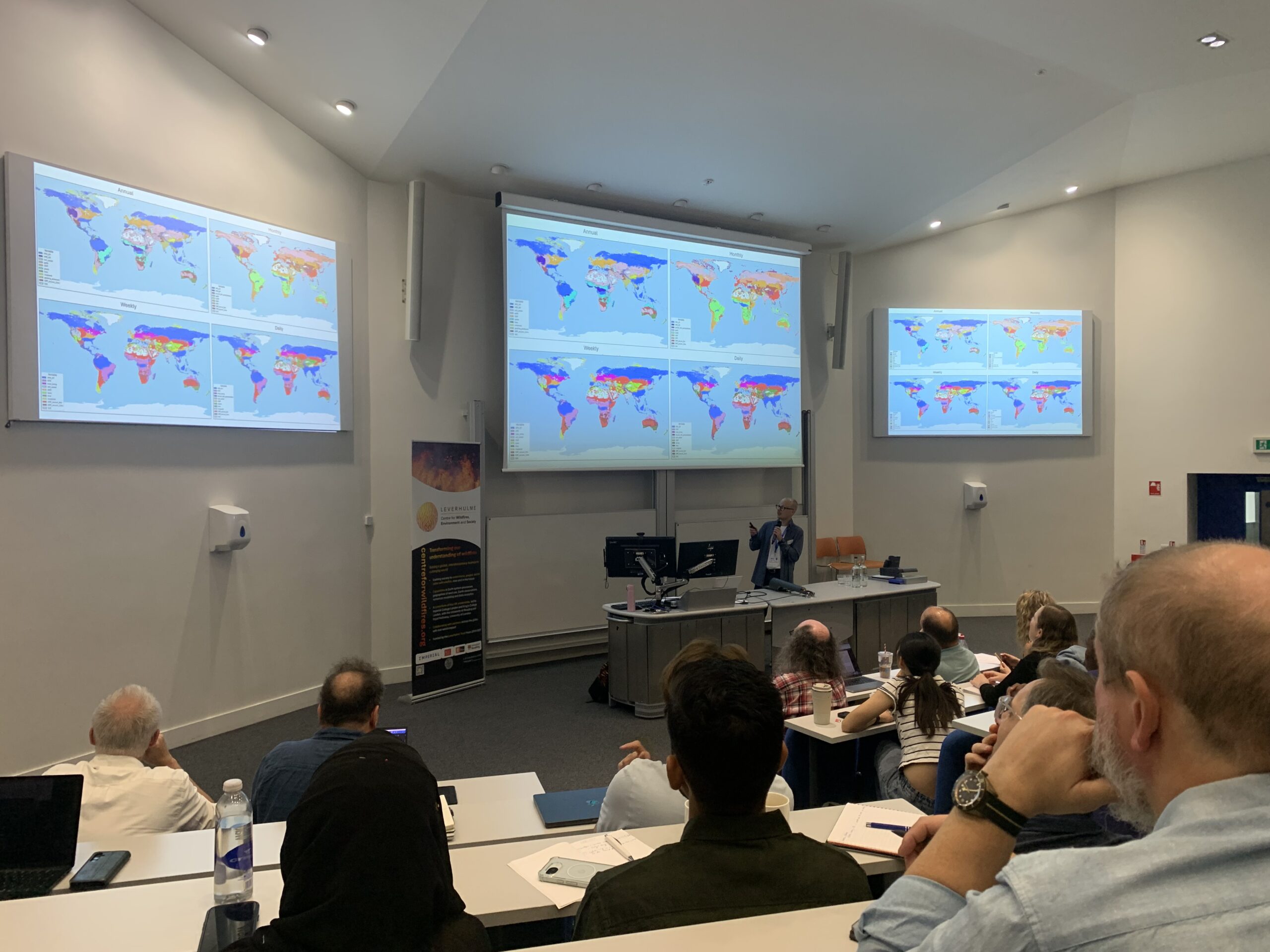
Figure 1: Dr. Andrew Clelland presenting work from the Fire-Vegetation interactions Giraffe team at the Leverhulme Wildfires Summer Conference 2026.
Chris then presented his work in theme C on the deprivation and fire-related air pollution in Africa. Chris’ study is interesting as it looks at not only the health effects of local fires, but also fire emissions that have been transported from up to 2000km away. The study finds that the spatial patterns between deprivation and fire emissions vary between countries and that national and regional management are likely needed to reduce the impacts across borders.
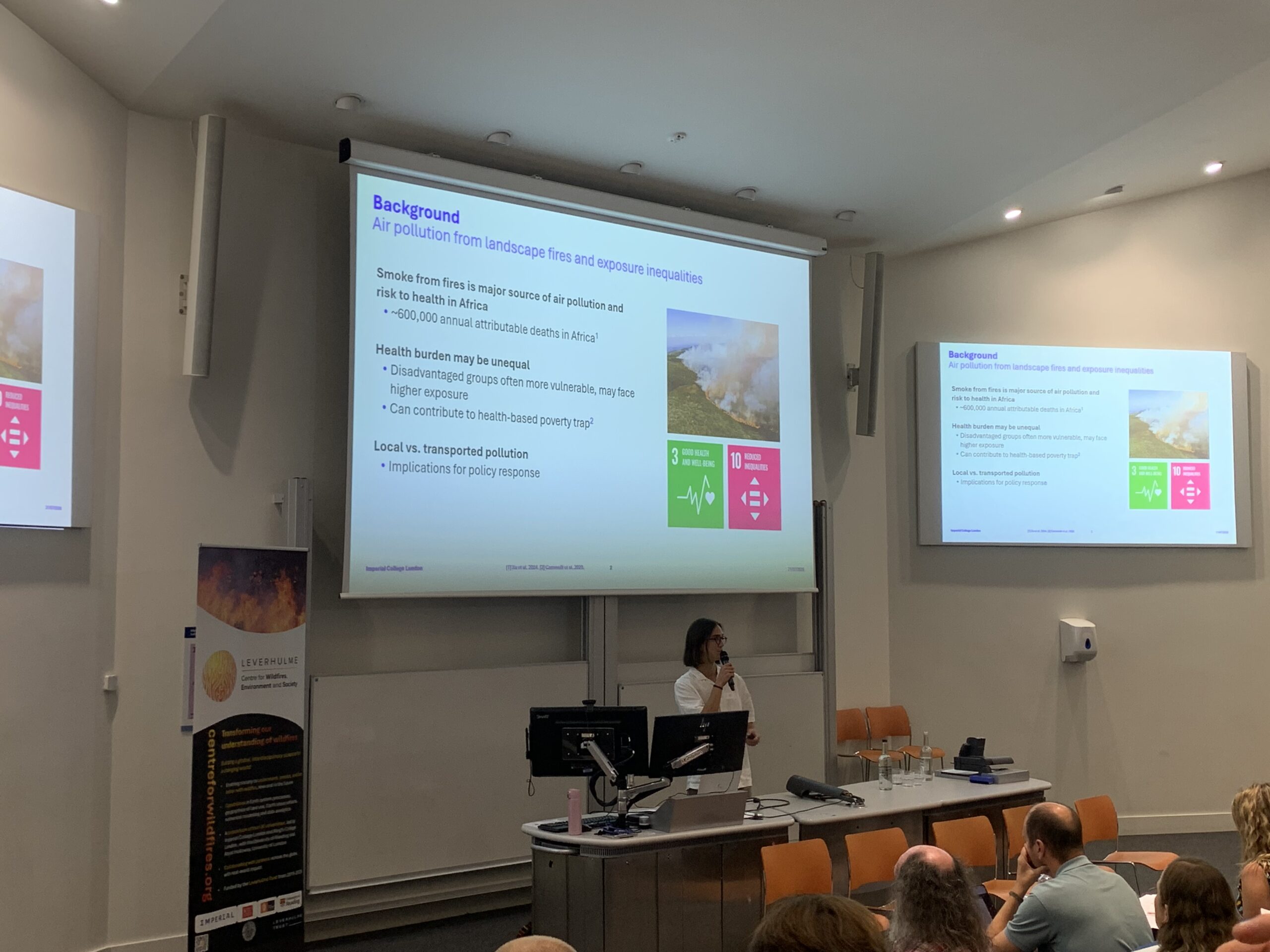
Figure 2: Chris Ho presenting his PhD research on fire emissions in Africa at the Leverhulme Wildfires Summer Conference 2026.
At the conclusion of the first day of the conference there was a poster session with over 40 contributors. Isidora presented her work during this session on how we can understand the drivers of fires in the Holocene by first understanding the drivers of fire in the modern time period. Isidora’s study fits a generalised linear model to 8 predictors of modern fire (that we can also access for the Holocene) to first test a potential Holocene fire model in the modern time period.
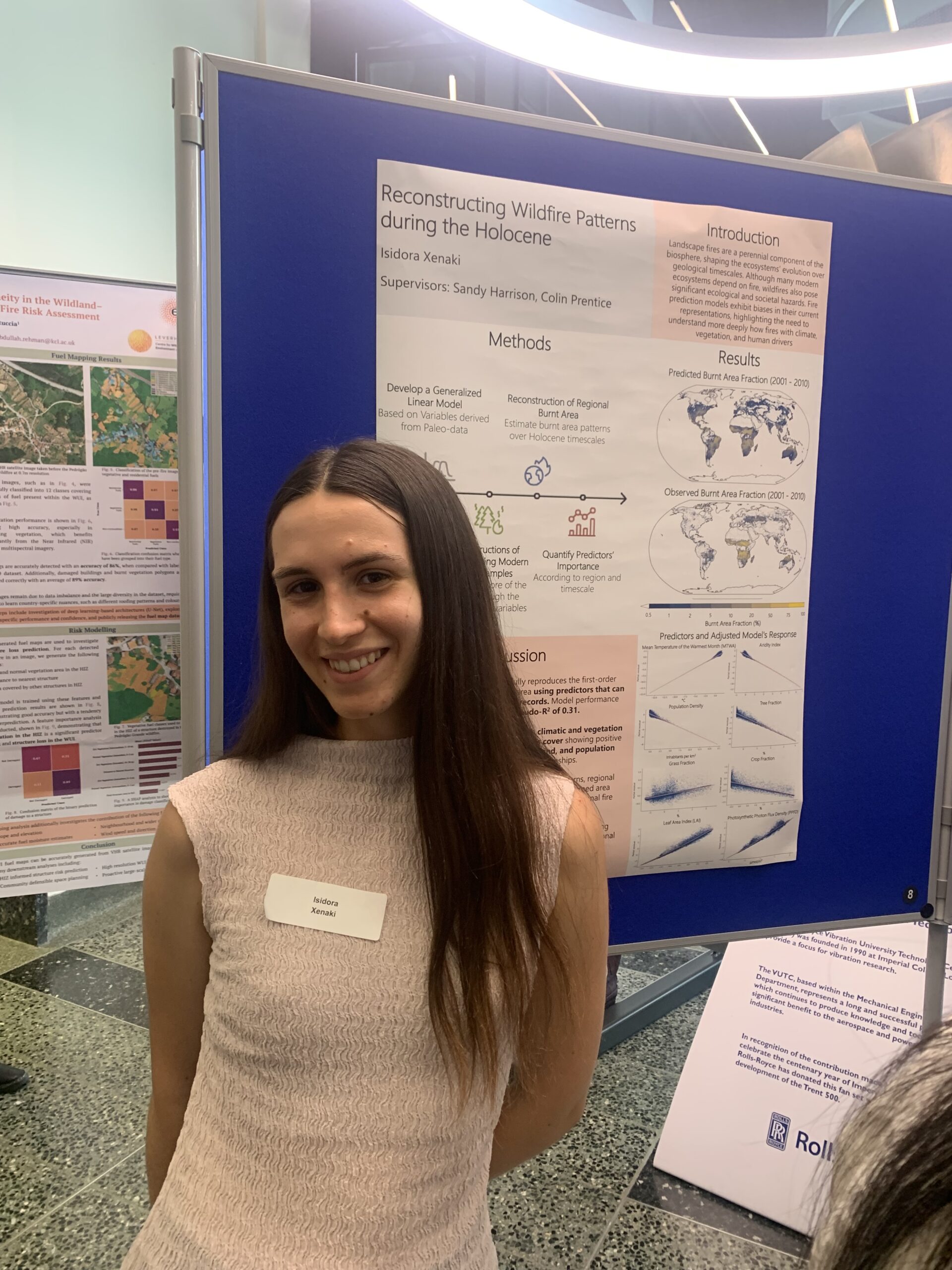
Figure 3: Isidora Xenaki at the poster session during the Leverhulme Wildfires Summer Conference 2026.
Speaking on her experience at the conference Isidora said:
“It was an incredible experience meeting and discussing my research with scientists and practitioners from diverse disciplines who study wildfire behaviour and management. The Leverhulme Summer Conference is the perfect opportunity for someone who wants to evolve as a fire scientist.”
A big congratulations to our team on their contributions to the conference which was a huge success. Other members of the team had a great time attending and hearing from a large diversity of speakers on all things wildfire.
To learn more about the Centre’s Giraffe teams you can see the centre website here.
To learn more about the team members you can see our team page here.
We look forward to sharing more with you on these exciting studies as they continue to develop!