
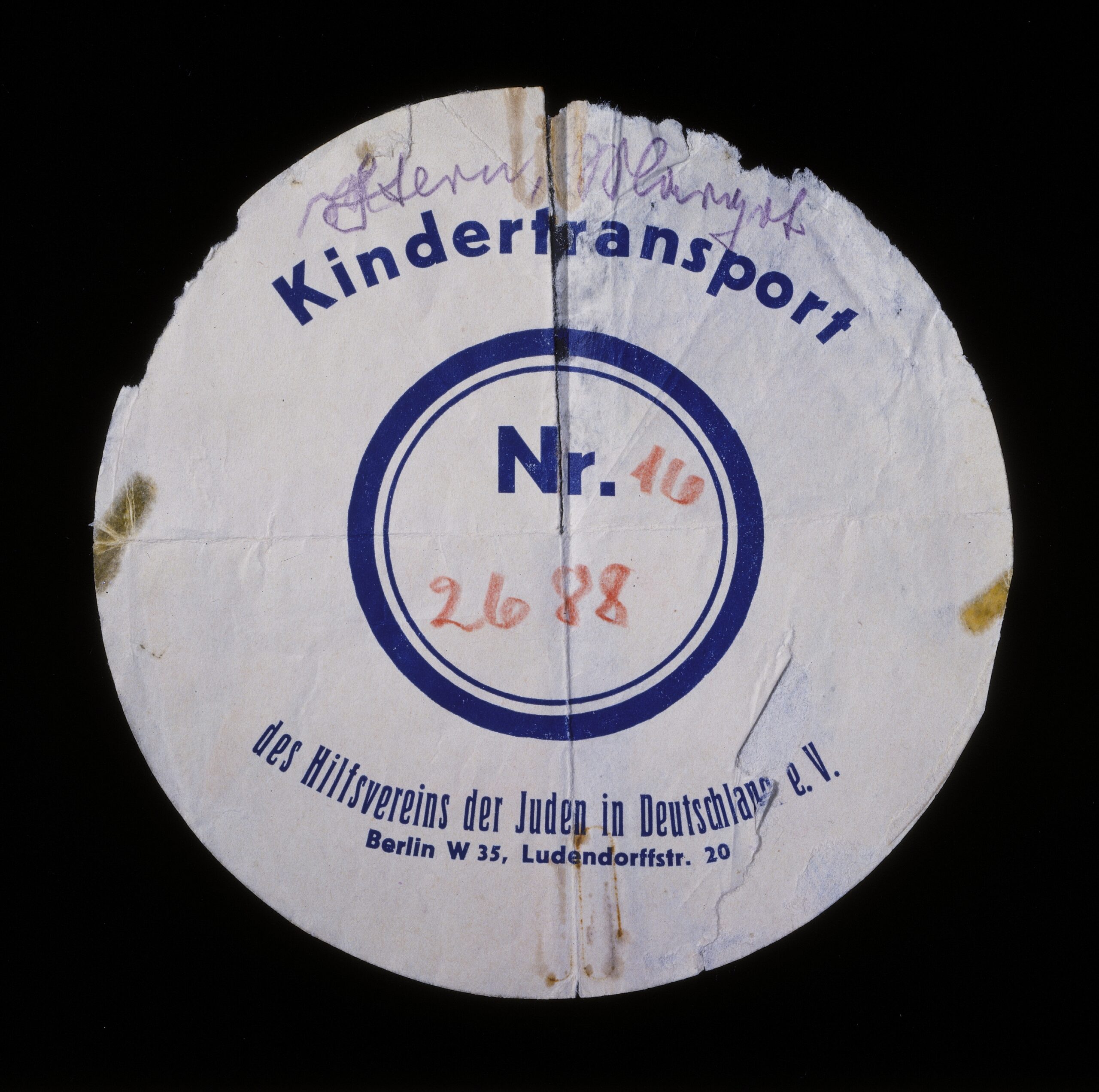

The Kindertransport often refers to the rescue mission of roughly 10,000 children from Nationalist Socialist Germany and occupied territories to Britain. To date, it remains one of the most symbolically charged episodes in British refugee history. Its mobilisation in politics, public memory, and national understanding continues to shape how Britain constructs its past and its humanitarian identity today.
I was honoured to be asked to be a panellist in a roundtable discussion on the “Kindertransport in British Memory and Culture” organised by the Leo Baeck Institute London, in collaboration with the British German Association.
The Kindertransport occupies a central place in Britain’s self-image as a humanitarian actor. However, this narrative often omits the complexity of the scheme and the experiences of those affected by it.
The focus of this event was closely aligned to my strand in the Nation of Refuge. As well as being focused on my specialist time period, both are concerned with understanding and reimagining how Britain has narrated itself as a “nation of refuge”.
Key themes discussed
The roundtable brought together three speakers whose work intersects across personal testimony, archival research, and institutional memory. Each contributed their specific research perspective to the debate. The key themes which stood out for me are:
- cross‑border flows and transnational histories
- the interplay between institutional records and ego‑documents and personal testimonies
- how national memory is constructed, simplified, or re-evaluated
- the ongoing need to challenge singular narratives about refuge and assimilation
These themes highlight the importance of examining refugee movements not in isolation but by tracing both the institutional structures that shaped children’s lives and the personal writings that reveal their agency, emotions, and everyday experiences.
Dr Amy Williams (Association of Jewish Refugees): Constructing a Transnational History
Amy presented an overview of the archival terrain surrounding the Kindertransport, highlighting the multiplicity of sources: transport lists, case files, local archives, newspapers, camp records, and incomplete documentation. She emphasised the importance of examining these various files and documents in relation to each other but also touched on how rewarding it is to reunite survivors and families of survivors with them.
Her presentation showcased the cross‑border movement of both children and documents. Therefore, she advocated for the need for a transnational, networked approach to Kindertransport history. At the same time, she drew attention to the terminology itself and what it means in different cultural and national contexts.
Finally, she urged us all to consider the current moment as a crossroads in Kindertransport memory, poised between national narratives and new, interconnected global framings.
Dr Monja Stahlberger (University of Reading): Listening to Children in Their Own Words
My presentation explored the potential of ego‑documents such as diaries, letters, schoolwork, notebooks (with a special focus on early testimonies) to bring Kindertransport children’s voices back into focus. These personal writings shed light on the lived experiences, the emotional landscapes and the agency of the children.
The everyday reality portrayed in the diaries gives us unique insights into how the child and young refugees navigated routines, personal relationships, as well as conflict and war. Each diary offers its own perspective as there are the differences across age, gender, religion, placements, and later migration routes. By centring children’s own writings, the diaries remind us to challenge celebratory national narratives and foreground the complexity of refugee experience.
Howard Falksohn (The Wiener Holocaust Library): Archival Ethics and Personal Connection
Howard offered an archivist’s perspective but also spoke from the point of a second-generation family member, bringing together both archival and personal history. He reflected on the ethical obligations of preserving and presenting personal material. His discussion of the Wiener Library’s evolving collections underscored the importance of accessibility and transparency in shaping future research trajectories.
Howard offered a reflection on his father’s experiences of displacement and growing up in Britain, drawing on items from his own family archive to illustrate the personal dimensions of forced migration. By sharing these materials, he highlighted how the Kindertransport shaped not only his father’s life but also the wider dynamics of his family across generations.
An overarching theme: Connecting Past and Present
The Kindertransport has gone through several phases of remembrance in Britain which ranged from private, fragmented postwar memory to broader national celebration in the 1990s and 2000s, to the more self‑critical and transnational framings of the past decade. This trajectory raises some key questions:
- How is the Kindertransport used today to support or subvert political or moral arguments about migration?
- Which stories are highlighted and which remain obscured?
- How is public understanding shaped through exhibitions, archives, labels, or the choice of what to make visible?
These questions resonate with broader shifts in Britain’s relationship with refugees where histories of sanctuary and welcome are increasingly connected to contemporary debates on asylum, humanitarianism, and belonging.
In summary, the roundtable offered a reflection on how Kindertransport history is researched, remembered, and reshaped. The conversations highlighted both the value of interdisciplinary research and the necessity of continually reassessing how Britain tells stories about refuge. These are also key points for us to also consider within Nation of Refuge.
You can listen to the recording of the event here:
https://open.spotify.com/episode/5fU47bepFVc2ZHu2JPVhIh?si=kbEcN5w0RAe1wF7wGtybbw
https://www.youtube.com/watch?v=Y0sBmyU5rgU
Copyright: United States Holocaust Memorial Museum
Provenance: Margot Stern Loewenberg
Source Record ID: Collections: 1995.21.2