Introduction to EcoArch and AQHCI
During the first week of June, members of the SPECIAL research team travelled to Nairobi, Kenya, to participate in the kick-off meeting of the EcoArch project.
EcoArch is the latest initiative involving the SPECIAL team and aims to apply palaeoenvironmental methods to investigate the interactions between humans, climate, and fire during the Holocene across the Afrotropics. (You can read more about the successful grant application involving the University of Oslo and Pennsylvania State University here.)
A central goal of the meeting was to formally establish the African Quaternary Human–Climate Interactions network (AQHCI). This network brings together a diverse group of sub-awardee partners from across Africa, who will generate regionally distributed datasets on fire activity, climate variability, and human–environment interactions over the last ~6000 years, particularly in areas beyond the primary EcoArch study regions.
Participants included researchers from Kenya, Nigeria, Ethiopia, Ivory Coast, South Africa, Benin, and the Democratic Republic of the Congo. The meeting provided an opportunity for each partner to present their proposed research, receive feedback, and identify opportunities for collaboration across sites and disciplines.
“I really enjoyed meeting up with old friends and collaborators at the EcoArch kick-off meeting in Nairobi, as well as the chance to meet new collaborators from the AQHCI. It was exciting to find out more about the AQHCI projects and see how they will expand the geographic coverage of EcoArch and to connect with some really enthusiastic young African scientists.” – Professor Sandy Harrison, EcoArch PI and SPECIAL PI.
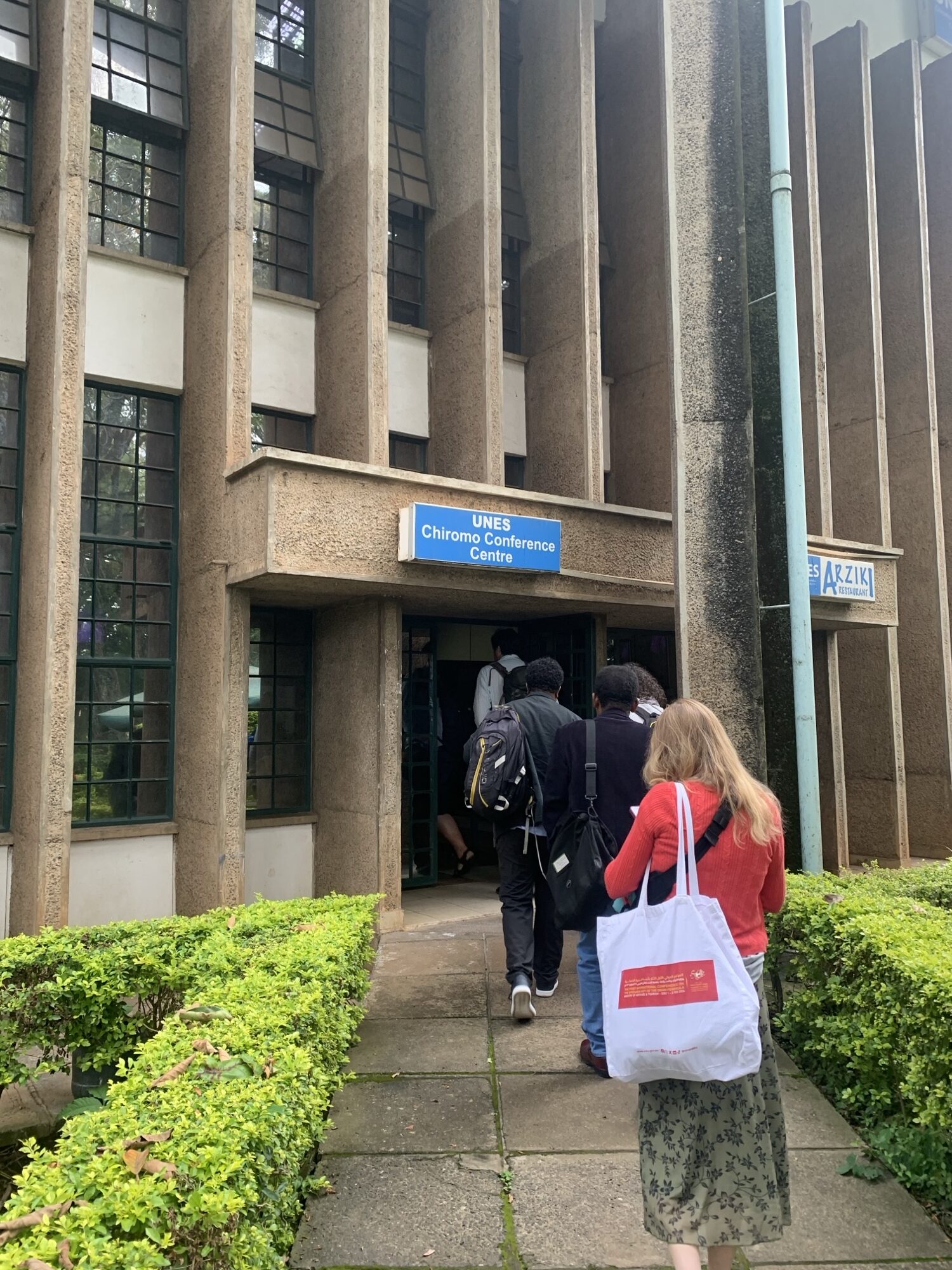
Fig 1: Arrival at the University of Nairobi conference centre where we were hosted for the duration of the kick-off meeting.
Meeting Aims and Highlights
The workshop combined methodological exchange and technical explanations. Sessions focused on outlining research designs, discussing lessons learnt from time spent in the field, and introducing key analytical techniques that will underpin EcoArch reconstructions of past environments and human activity.
Approaches to Sampling
A major theme of the meeting was the discussion of sampling strategies. As each partner will generate their own sediment cores and associated proxy datasets, good methodology is critical for comparison between sites and continental scale analysis.
EcoArch lead PI, David Wright, introduced the framework of “on-site, near-site, and off-site” sampling. This approach emphasises sampling not only directly at archaeological locations, but also across at an increasing distance from the site of interest. This will allow scientists on the project to develop a picture of the range of human impact on the landscape.
Discussions also highlighted the importance of:
- Surface sampling –> to characterise modern depositional environments
- Local vegetation surveys –> to establish contemporary ecological baselines
These modern analogues are essential for calibrating palaeo-proxies and strengthening interpretations of past environmental change.
New Tools and Approaches
The meeting also showcased several emerging analytical techniques that will enhance both the resolution and efficiency of palaeoenvironmental reconstructions:
- Automated pollen scanning
Microscopic slides can be imaged at high resolution, with machine learning–assisted algorithms used to identify and count pollen grains. This significantly reduces the time required for traditional manual counting.- Sedimentary ancient DNA (sedaDNA)
Ancient DNA extracted from sediments enables detection of past biological communities, including plants, fungi, animals, and potentially humans. This approach can provide high-resolution taxonomic information.- Biomarker analysis
The extraction of specific molecular compounds allows identification of past organisms and environmental conditions, even in the absence of visible fossil remains.Together, these techniques provide complementary lines of evidence that improve the robustness of multi-proxy reconstructions.
Modelling Approaches
The final major theme of the meeting focused on modelling approaches for palaeoenvironmental reconstruction, an area in which the SPECIAL research team will play a leading role within EcoArch.
Sandy Harrison (SPECIAL PI) introduced the principles of palaeoenvironmental reconstruction, with particular emphasis on reconstructing past wildfire regimes. This included discussion of:
- The integration of both macro- and micro-charcoal to account for source area
- Reconstructing fire and burnt area from charcoal
- The use of statistical techniques to disentangle the drivers of fire in past
- Running counterfactual experiments with process-based or statistical models to test hypotheses
Esme Cruz-Silva (SPECIAL PDRA) presented her previous work on reconstructing climate and vegetation dynamics in the Middle East, highlighting transferable methodologies that will be applied to African datasets. This includes methods such biomisation of pollen into vegetation types and tolerance-weighted, weighted-averaging partial least squares reconstruction of climate.
Colin Prentice (Imperial College London – EcoArch Associate) introduced the application of eco-evolutionary optimality theory to climate reconstruction. This approach leverages the idea that plant functional traits and ecosystem processes optimise to their environmental constraints, providing a framework for reconstructing vegetation under past climate conditions. (For more information on EEO theory we suggest checking out the LEMONTREE project website.)
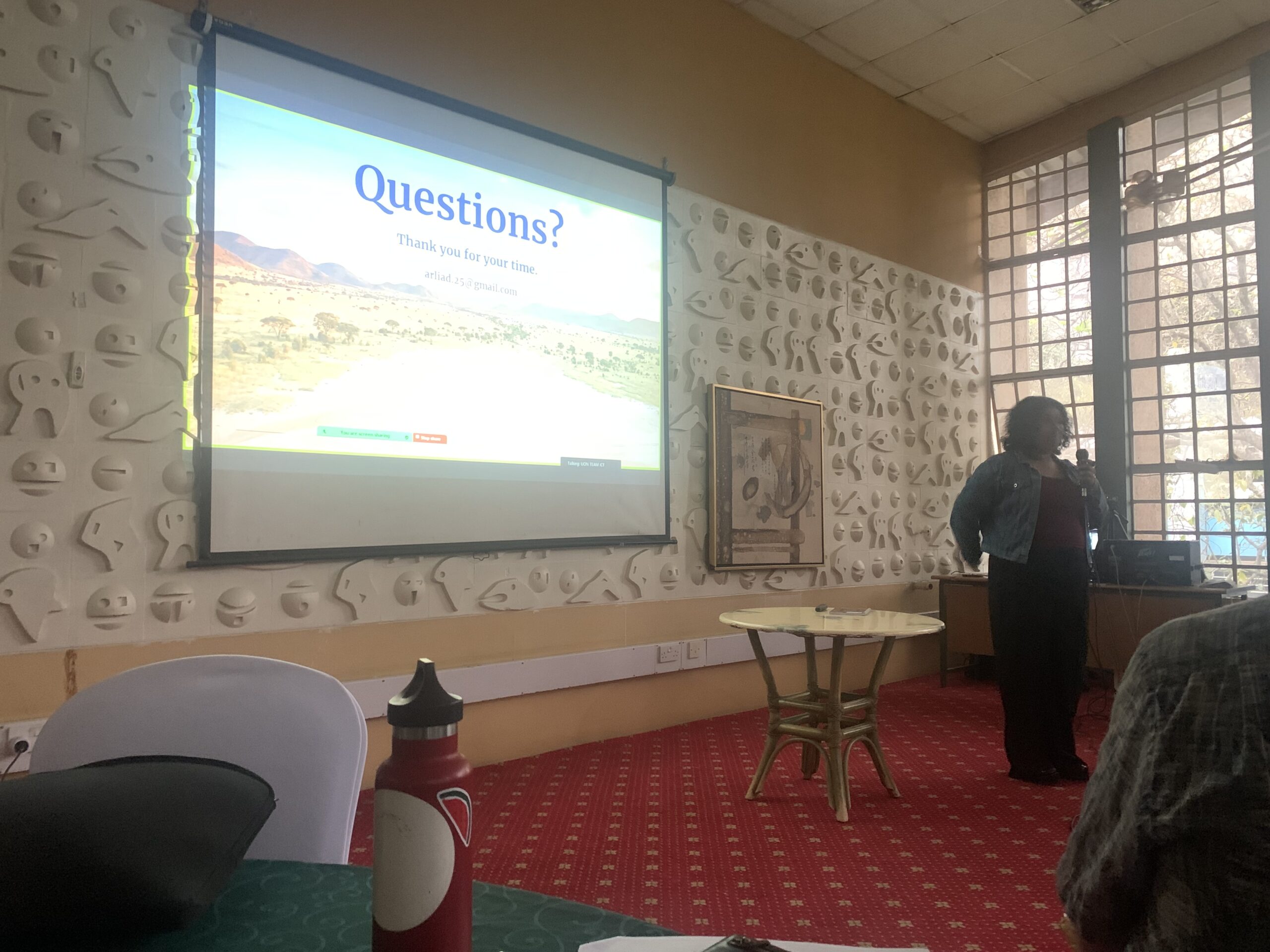
The SPECIAL group presentations also featured talks from two PhD students. Arlia Dhevnanan presented her PhD proposal on reconstructing Holocene climate variability across Africa, emphasising spatial synthesis across multiple proxy records. Sophia Cain introduced modelling the interactions between fire, vegetation, and human health during the Holocene.
Fig 2: Presentation by Arlia Dhevnanan on her PhD thesis topic at the kick-off meeting. Arlia will be joining the SPECIAL team at Reading University in September 2026.
A Trip Through Time
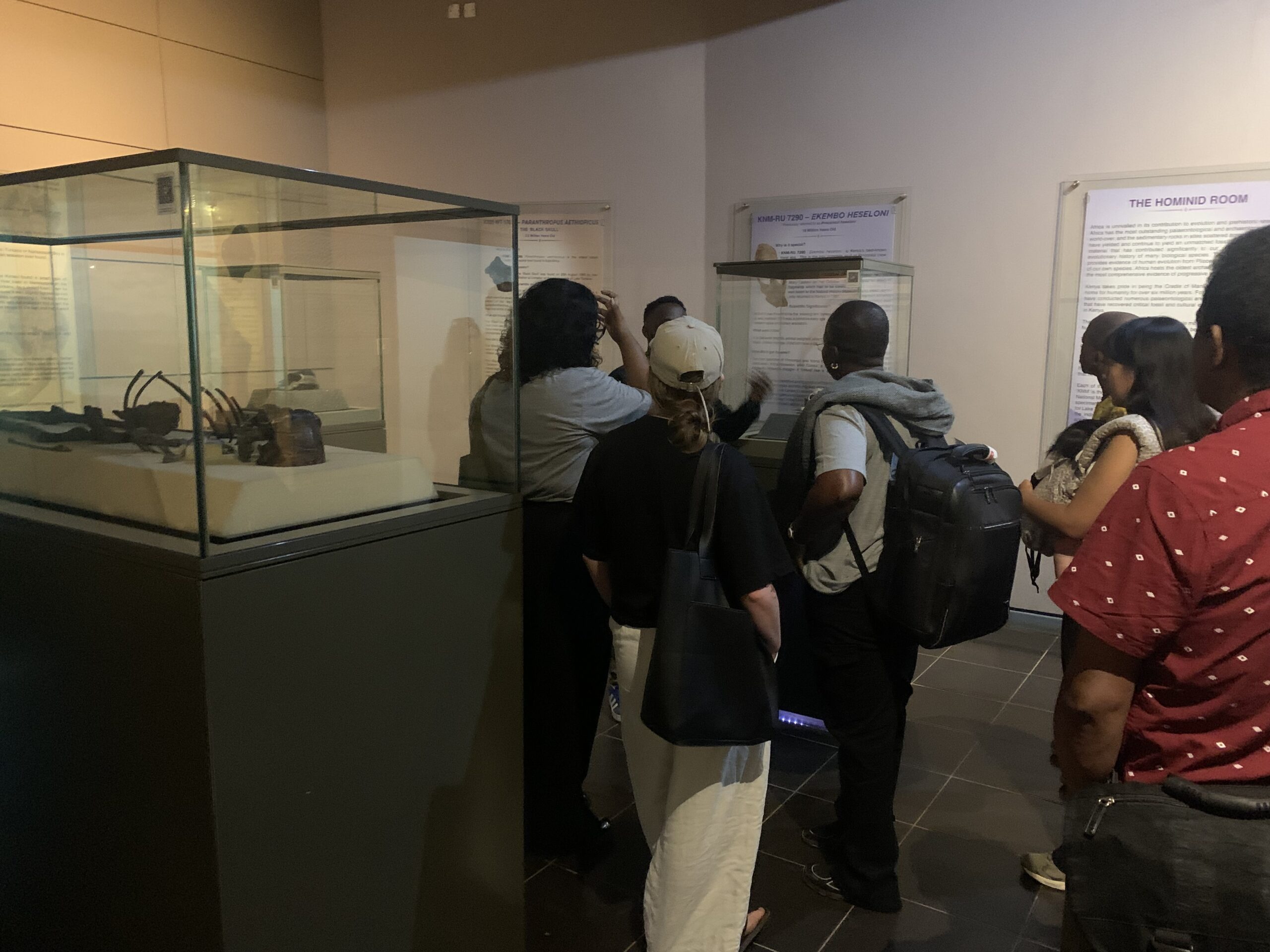
On the final day of the meeting, participants visited the National Museum of Kenya, one of EcoArch’s key partners, for a guided tour. The museum houses an exceptional collection of hominin fossils and archaeological artefacts, documenting human evolution over millions of years across Africa.
Fig 3: The group learning about the skulls of early hominids at the National Museum of Kenya.
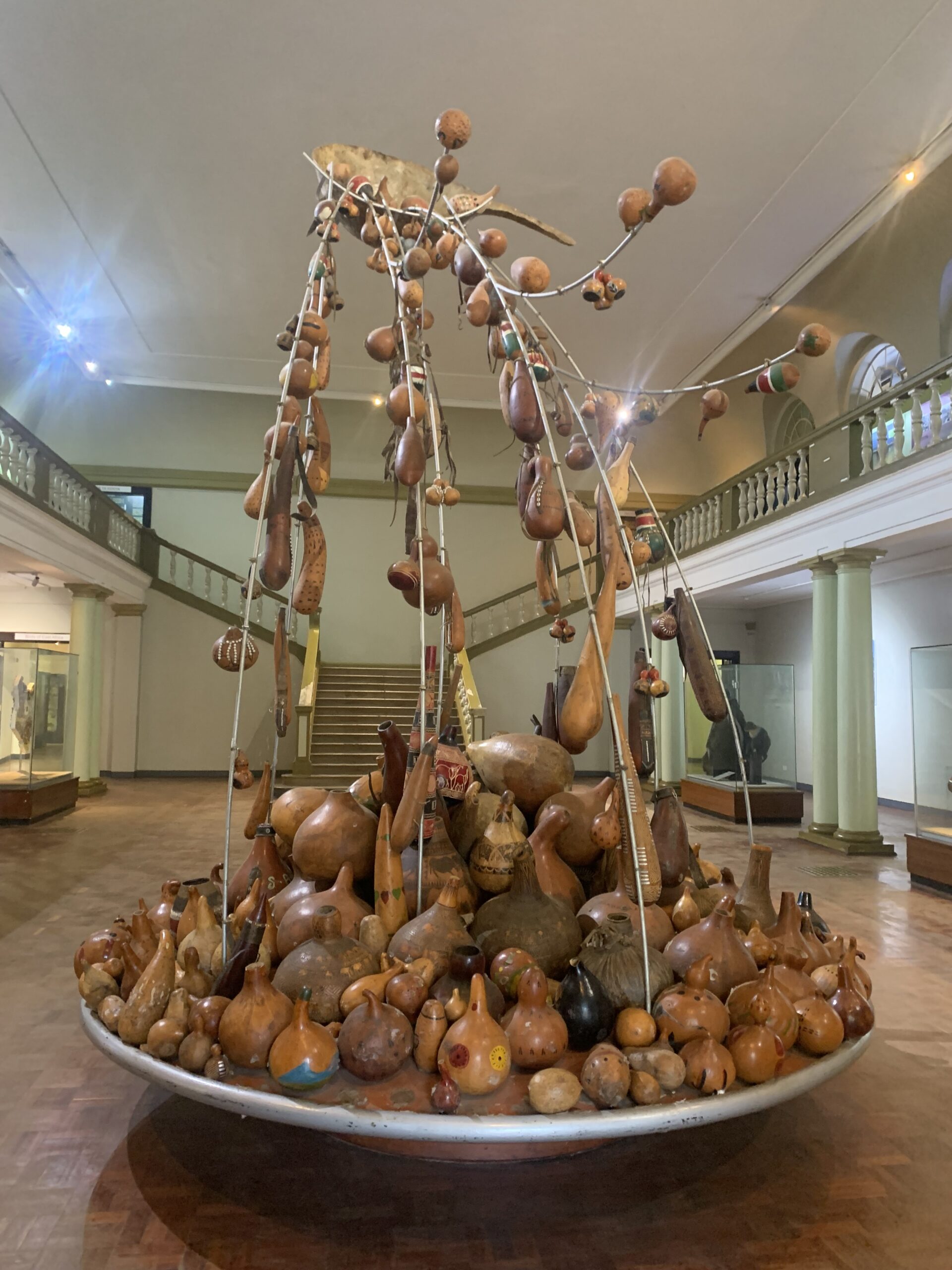
Participants also got to hear about local Kenyan culture, for example, pictured below are gourds from various tribes from across Kenya. Used for diverse activities from music to carrying water, each gourd is slightly different.
Fig 4: Gourds from tribes around Kenya, displayed at the National Museum of Kenya.
Wrapping Up
We extend our sincere thanks to the University of Nairobi and the National Museum of Kenya for hosting the EcoArch team and AQHCI partners in Nairobi.
The meeting fostered new collaborations, strengthened existing networks, and helped refine research strategies across the project. As we move forward, we are excited about the upcoming field campaigns in Zambia and Mali, as well as the next network meeting planned for Dakar.
Stay tuned for further updates via the EcoArch website and social media channels.