
Joint Fellowship with Special Collections
PLEASE NOTE: The fellowship application form will open at 12:00 on Wednesday 28th October.
The IDRC in Digital Humanities and Museums and Collections is delighted to be able to offer a Joint Fellowship to one researcher to support innovative, collection-driven digital humanities research. Funding is available for one Fellowship, worth £2,000.
The fellow will work with one of the following collections, identified by the Collections team, which we hope to represent a diverse range of subject areas and offer rich potential for archive and digital humanities research.
Information about the 2027 Fellowship Collections is available to view here:
Max Weber and Donald Gordon
Alvin Langdon Coburn and Max Weber
Alvin Langdon Coburn (1882-1966) was an innovative American-born photographer who worked in Britain. He pioneered the vortograph, an abstract work produced using mirrors in a vortoscope. His portrait photographs were published in two works, Men of Mark (1913) and More Men of Mark (1922).
Recognised as the artist who first introduced Cubism to the United States of America, Max Weber (1881-1961) travelled extensively in Europe between 1905-1908. This trip, and particularly his time in Paris, had a lasting influence on his life and work. Heavily influenced by Rousseau, Matisse and Cezanne, Weber’s works on his return to the USA were considered that of a pioneering modernist. Interested in the movement of figures, Weber often chose subjects from both the Vaudeville theatre and cabaret. Throughout the 1920s, Weber continued to explore new ideas. New York City became his favourite subject, as he was interested in its persistent movement and visual stimulation.
We have Coburn and Weber material within the Special Collections Library, Archive and Art Collections.
The library collection consists of 16 books illustrated by Coburn, mostly presented by Coburn himself.
The archive collection [MS 5683] contains some copies and possible original images by Coburn from his Men of Mark series.
The art collection holds a total of 16 paintings and drawings by Max Weber.
Donald Gordon
Donald J. Gordon (1915-1977) was Professor of English at the University of Reading.
We have material relating to Donald Gordon’s research, particularly on W.B. Yeats (1865-1939), within the Special Collections Library and Archive Collections.
The library collection includes numerous editions of Yeats’ literary works comprising all genres, from poetry to theatre, from stories and essays to autobiographical works, including some of his correspondence. The collection is very strong on Irish theatre, particularly plays and drama by Yeats and his contemporaries, who were associated with the Abbey Theatre in Dublin. Many of the volumes have the imprint of Dolmen Press, Talbot Press or Maunsel & Co., if published in Dublin, or T. Fisher Unwin, Elkin Mathews or G. Allen and Unwin, if published in London. Several of Yeats publications contain illustrations by his younger brother Jack Butler Yeats, and some have bindings designed by Althea Gyles. A few items bear the imprint of the Cuala Press, the private press set up by Elizabeth Corbet Yeats in 1908.
The archive collection ‘W B Yeats: Images of a Poet Photographic Collection’, [MS 5299] contains images used in the W B Yeats Images of a Poet exhibition, displayed during 1961 at the Whitworth Art Gallery, Manchester and The Building Centre, Dublin. Professor Gordon contributed his photographs and along with Ian Fletcher, also of the University of Reading, wrote the greater part of the exhibition catalogue for the 1961 exhibition.
Owen Jones and the Great Exhibition of 1851
Owen Jones and The Great Exhibition
Owen Jones (1809-1974) was one of the most influential architects and designers of Victorian Britain. During the 1830s, Jones undertook a grand tour through the Mediterranean and North Africa, spending six months at the Alhambra in Granada.
Jones was a key figure in the Great Exhibition of 1851, overseeing the arrangement of the exhibits and the decoration of the Crystal Palace. After the Great Exhibition, Jones’s design theories were realised in his best-known work, The Grammar of Ornament (1856).
Owen Jones’ work is well represented across our holdings within our Rare Books and Archive Collections – particularly within our Printing Collection, which includes many of Jones’s published works; original artwork for the De La Rue printing firm in the De La Rue Archive; designs featured on Huntley & Palmers packaging in the Huntley & Palmers Archive; and the Great Exhibition Collection (1851),
The Great Exhibition of the Works of Industry of all Nations, also known as the Crystal Palace Exhibition, was held in Hyde Park, London, from 1 May to 15 October 1851.
The library collection contains around 150 printed books and periodicals, plus pamphlets and ephemera, approximately 50 prints, and some objects. It includes the Commission’s official catalogues and jury reports, handbooks, unofficial guides and accounts, popular, often pictorial material, souvenirs and similar pieces.
W.H Smith Archive
W.H. Smith Archive
Henry Walton Smith (1738-1792) and his wife Anna Smith (nee Eastaugh, c.1756-1816) first established a newsvendor’s business in around 1790 in Little Grosvenor Street, London. In 1820, the business took its first steps in newspaper wholesale distribution. By 1848, the business had expanded and began opening newsstands in railway stations, starting at Euston station in London. From 1862 to 1881, Smith’s published the “Select Library of Fiction” (a series of fiction books aimed at travellers known as the “Yellowbacks”). The wholesale business continued to expand, and in order to reduce the dependence on railway contracts, the business started to open retail shops, beginning in Clacton-on-Sea in 1901. The Edwardian period also saw the printing works develop into a design studio, and the business adopted a typeface by Eric Gill and a logo by R.P. Gossop. In 1966, W.H. Smith’s created a standard book number consisting of a nine-digit code, which was adopted in 1970 as the international standard number and finally became the International Standard Book Number (ISBN) in 1974.
The W.H. Smith business archive covers the period 1773 to 1996 and contains records that cover all aspects of the company’s work.
The library collection contains around 100 books and 20 periodical titles, detailing the history of W.H. Smith and material related to bookselling. The collection also includes rare runs of internal publications, such as Newsboy, Newslink and Newsbasket.
Nancy Astor Collection
Nancy Astor
Viscountess Nancy Astor (née Langhorne 1879-1964), married Waldorf Astor in 1906 and they settled at Cliveden, Buckinghamshire. When Waldorf succeeded his father as Viscount Astor in 1919, he had to forfeit his position as MP of Plymouth (Sutton Division). Nancy ran in the subsequent by-election and was elected in a landslide victory. She became the first woman MP to take her seat in the House of Commons on 1 December 1919. During her political career, Nancy campaigned particularly for women’s causes and temperance, and she was known for her sharp wit. She continued to represent the Plymouth constituency until her retirement in 1945.
The collection consists of two main groups of papers. Political correspondence 1919-1945 , which contains letters in and out, as well as parliamentary papers, prospective legislation and other publications. General/Personal correspondence 1900-1964 contains letters from family, friends and eminent people in the UK, Europe, Canada and the United States.
Subjects covered include elections and local affairs in Plymouth; children’s education and welfare; Christian Science and other religious subjects; health; pensions; protection and support of the family; penal reform; temperance; unemployment; suffrage and other women’s rights; and work to support the war effort during the two world wars.
Sundry papers include unclassified files relating to Plymouth, non-parliamentary and parliamentary speeches, articles and messages, invitations and royal visits, photographs, political diaries and other diaries. There is also a large collection of bound newspaper cuttings: American 1919-1940; British 1908-1964.
University History Collection
University History Collection
The University of Reading celebrates its centenary in 2026, but records relating to it stretch back further. The first University Extension lectures in Reading were given in 1885 to bring University of Oxford education to people who may not have otherwise been able to access it, and to build on the work of local Schools of Art and Science. Since then, university education in Reading has developed, from the establishment of University College Reading in 1892, to the opening of the University of Reading as its own institution in 1926. Education has taken place on a number of sites across Reading and beyond, from lecture rooms on Valpy Street to farms at Shinfield.
The University History Collection consists of large quantities of archive and library material. The collection includes papers relating to the corporate development of the university, such as financial papers and governance minutes. These can tell us about how the university developed as an organisation. The collection can also be used to learn about the buildings, farms and sports facilities which make up the university. The collection provides information about a range of aspects of student life, such as accommodation, teaching and learning, sport and social activities. Visual materials, including posters, photographs and plans, enable us to see the people, places and events which make up our shared history.
Choosing a Collection
The fellowship will involve one of the selected collections. The application form will not include other collections, and applicants must select their intended collection as part of the process.
We encourage applicants to make use of the online resources provided for each collection when building their project, as well as to ask for support and advice on specific aspects.
Fellowship Aims
- Collections Research Innovation
Enable the Fellow to design and pilot a research project grounded in Special Collections materials. Through this, the Fellow will develop core research and project-delivery skills that will be useful for future research projects. This contributes to the University of Reading’s Academic Career development aims for colleagues.
- Digital Innovation
Advance the use of DH methods at the University of Reading (e.g., text analysis, mapping, digitisation workflows, AI-assisted transcription). Through the exploration of digital methods within the remit of Museums and Collections, the Fellow will contribute to a growing research culture using digital methods to answer complex research questions.
- Institutional Value
Contribute to the value of institutional collections by producing outputs that enhance Museums and Collections, support the activities of the IDRC DH and enhance their research plans.
Fellowship Outputs
Successful applicants must submit a short report to the IDRC at the end of the fellowship, and will be asked to write a brief blog post summarising their fellowship. The practical, digital output must be delivered by the end of the fellowship, while the research output should be developed in the year after the fellowship and submitted by July 2028.
During the fellowship, we expect the fellow to deliver several outputs.
A practical digital output, for example:
- Improved metadata for a selected archive;
- Creation of structured datasets from archival material;
- Transcription of handwritten materials using digital tools;
- Pilot for IIIF, TEI, or linked data approaches;
- Workflow for creating a database or other tool
- Marked up document(s)
At least one research output, for example:
- Working paper/article draft
- Conference paper
- Pilot dataset or digital edition
These are not exhaustive lists; applicants are welcome to suggest alternative outputs.
Please note that these activities and costs are out of scope:
- Projects that focus solely on developing a digital tool or software with no application to the specified collection.
- Due to time constraints, teaching replacement is not an eligible cost.
In addition, the fellow will be expected to attend an end-of-fellowship meeting with collections staff and co-directors, intended to report key findings, outline next steps, and discuss ongoing support.
Eligibility
To be eligible, applicants must be a full member of a research division. We expect most applications to come from the H&C and P&R themes. Applicants from the Environment and AF&H themes are welcome to apply, but we ask you to discuss your application with the Digital Humanities Officer prior to submission to ensure it is eligible. We regret that we cannot offer funding to teaching-only colleagues, PhD students or colleagues whose posts are fully externally funded.
If you have any questions about eligibility, please contact: digitalhumanities@reading.ac.uk.
Eligible costs
- Campus Jobs roles to support, e.g. digitisation, data collection and entry tasks, coding
- Staff costs for special collection staff to support, e.g. digitisation (please contact digitalhumanities@reading.ac.uk to discuss in advance).
- Software purchase and licenses
This is not an exhaustive list; please contact the DH Officer to discuss your planned project if you are unsure if your costings would be accepted.
Ineligible costs
- Teaching buyout for the applicant
- Travel costs to and from Special Collections
How to Apply
Please complete the application form by 17:00 on 2nd December 2026.
Timeline:
| Call open | 28/10/26 |
| Apply by | 02/12/26 |
| Decisions | 16/12/26 |
| Project period in which funds must be used | 01/02/27 – 31/07/27 |
| Project report and blog due | 31/10/26 |
Assessment Process
Applications will be assessed by a panel comprising invited DH co-directors and Special Collections experts, based on the following criteria:
- The project can be delivered in the timeframe proposed;
- The applicant has the capability to deliver the project;
- The project will develop a digital output, tool or workflow which will enhance or improve accessibility of, access to, or understanding of the chosen collection;
- The project meets the criteria for Digital Humanities research.
Applicants should be able to demonstrate the link between their research approach, methodologies or critique and the humanities. Applications for projects that are purely digital (e.g. , developing an AI model) with no link to humanities research will be considered ineligible.
Contact and Further Information

For queries about eligibility, costings or the application process, please contact digitalhumanities@reading.ac.uk. This is a shared mailbox managed by the DH Officer, Abbie Tibbott.
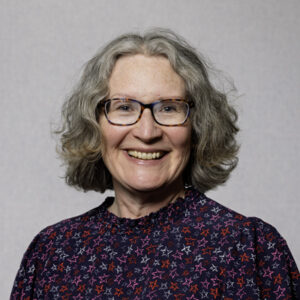
For queries about the specific collections selected, Special Collections, or the archive process, please contact Sharon Maxwell (Archivist and DH Hub member) at s.maxwell@reading.ac.uk.