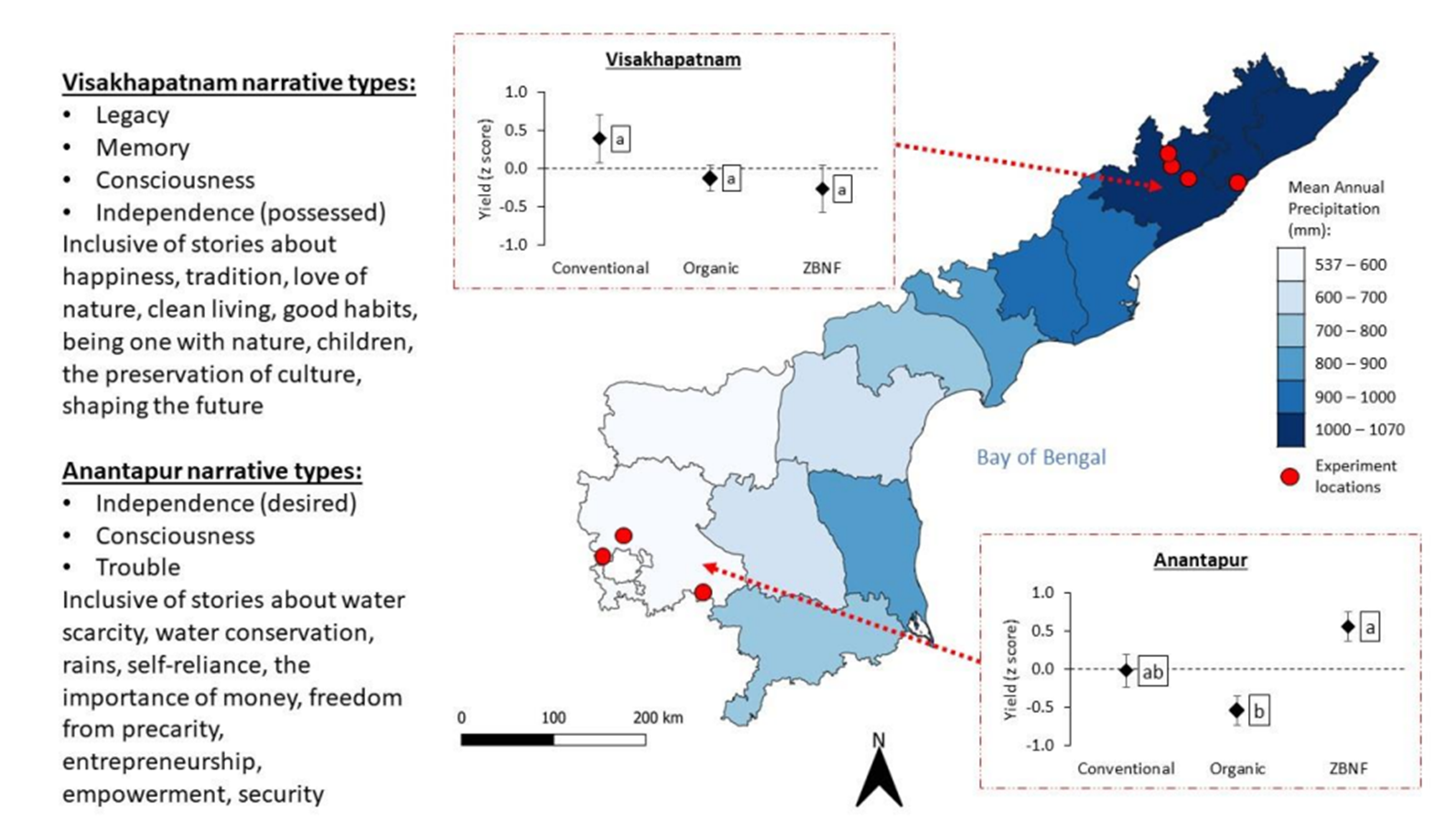
Innovative interdisciplinary research at the University of Reading combing participatory photography and farm yields shows both the effectiveness and motivations for adoption of national farming transition in Andhra Pradesh, India. We evidence the case for expansion, benefiting the land, the farmers who work it, gendered food security outcomes and wider agrifood system policy.
The University of Reading has been developing an evidence base to support Andhra Pradesh Community Managed Natural Farming (APCNF) in India in understanding the strengths and challenges, the extent that success has come from context-specific conditions, and whether there are principles that could be useful for scaling the approach. An interdisciplinary team of soil and social scientists from the University of Reading and Rythu Sadhikara Samstha (RySS) have been working together since 2018 to deliver an holistic understanding of APCNF, built capacity, innovated new methods and created actionable policy advice.
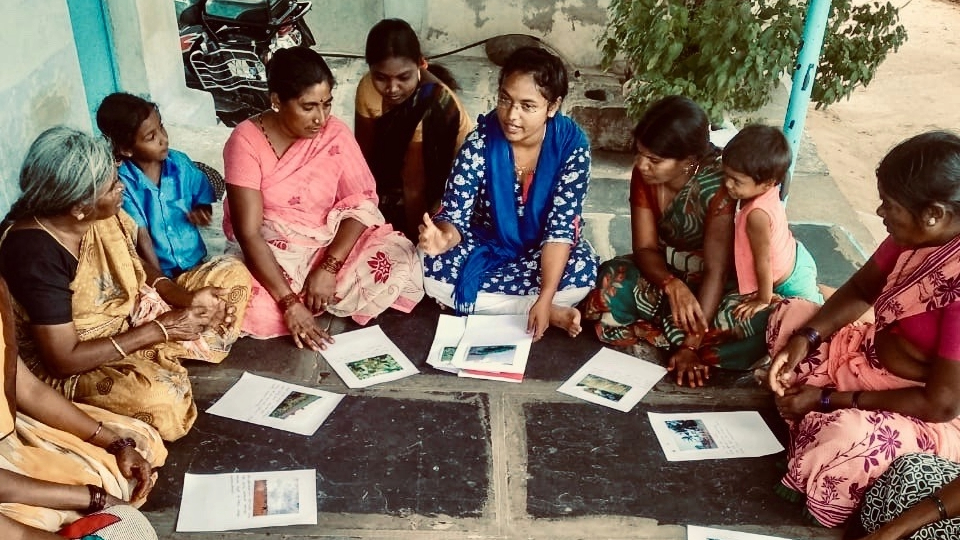
We conducted environmental evaluations of the APCNF system and the influence of individual components, which indicate no yield penalty associated with the first year of conversion to an APCNF system. This is a positive outcome relating to lower financial input and beneficial environmental impacts. We explored farmers’ motivations for adoption using innovative participatory photography methods and forum theatre. Understanding these local perspectives and rationales helps organisations supporting family farmers to better communicate and develop shared priorities. We conducted an gendered survey in the low rainfall district of Anantapur where APCNF biophysical benefits were most evident and livelihoods are particularly vulnerable to food insecurity and the impacts of climate change. Results showed benefits for women APCNF farmers, with more control over entitlement exchange, leading to better food security and nutrition, household resilience and gendered social change. A household economy approach across Andhra Pradesh is now extending knowledge about the role of market accessibility for this exchange entitlement of APCNF production and food security and will build a future monitoring system of APCNF impacts.
Our integrated evidence demonstrates that natural farming can deliver sustainable productivity, economic stability, and social transformation for family farmers. It is important to promote the evidence of success, train extension workers in natural farming to increase drought resilience and environmental benefits and build partnerships with farmers to innovate choice in natural farming practices. Natural farming approaches have an important role in supporting transitions in agrifood systems in India and beyond.
Further details can be found at Andhra Pradesh Community-Managed Natural Farming (APCNF).