
Dry air flowing from deserts and other arid regions thousands of miles away causes hiatuses in monsoon rains in India, which often lead to water shortages for more than a billion people.
Scientists from the University of Reading studied 188 monsoon ‘breaks’ — periods when the vital summer rains stop falling — between 1940 and 2023. The research, published this week in the Journal of Climate, is the most comprehensive study of its kind.
The monsoon brings more than 75% of India’s yearly rain between June and September. A break happens when these rains stop for several days or even a few weeks. During severe breaks, rivers can shrink, crops suffer, and taps can run dry.
Dr Akshay Deoras, lead author at the University of Reading, said: “Dry air from deserts and other arid regions in central and western Asia travels thousands of miles before reaching India and switching off the monsoon rains.
“When these air masses arrive, crops can wither in the fields and water supplies can run low for more than a billion people. By tracking these flows as they build up days before they reach India, we can give farmers and communities precious time to prepare for the dry spell ahead.”
Desert to drought
The research team found that dry air from the Middle East and central Asia begins flowing into India around seven days before a break reaches its worst point in India. The penetrating dry air overpowers the moist monsoon winds and stops rain clouds from forming.
The scientists tracked where the air came from using computer simulations, following the path of more than 60,000 air parcels backwards in time. The dry air travelled from as far away as the Mediterranean Sea, crossing desert regions and entering India mainly through gaps between mountain ranges.
The study also found that stronger dry air intrusions lead to longer breaks. Breaks lasting just three days had relatively weak dry intrusions as their precursors, while those lasting seven days or more had dry intrusions more than twice as strong.
Driest August in 123 years
The findings help explain recent water crises. August 2023 provided a clear example, when India experienced its driest August since 1901. The scientists’ analysis shows that powerful dry air intrusions from arid regions in central and western Asia drove these severe monsoon breaks in the month.
The team developed a novel index, which could help weather forecasters spot dry air before it arrives in India. This would give farmers time to manage agricultural activities, water managers time to restrict supplies, and communities time to prepare for water shortages days before the rains stop.
Published: 12 February 2026
Read more: The Role of Dry Intrusions in Breaks of the Indian Summer Monsoon
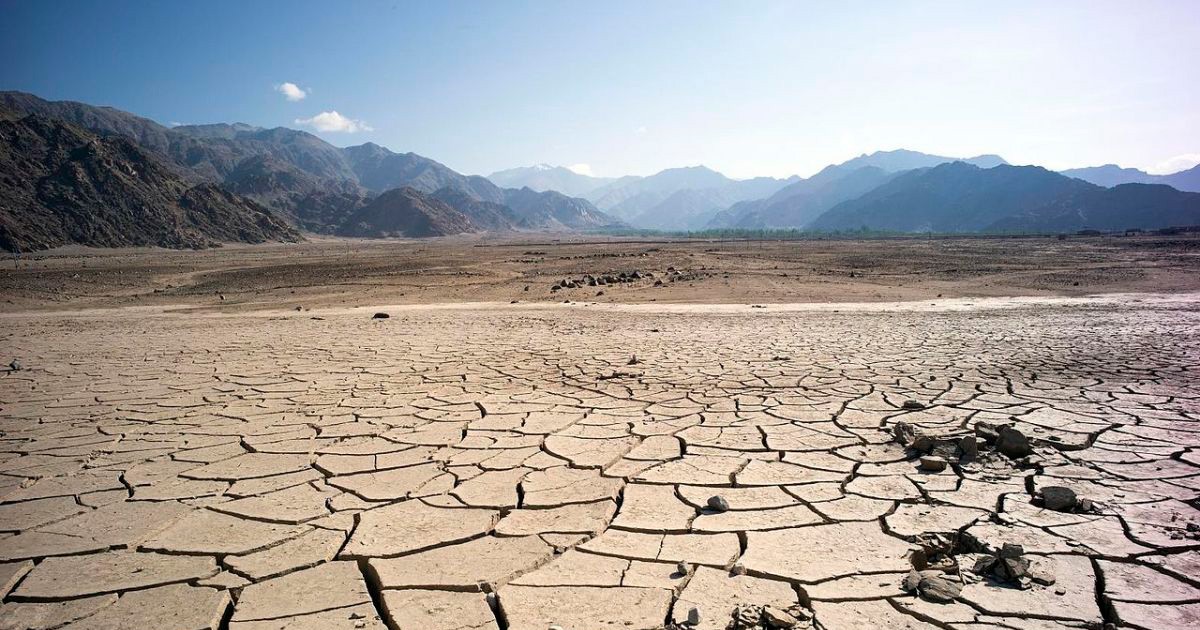
Image: Drought conditions in Ladakh, India, via Wikimedia Commons.