
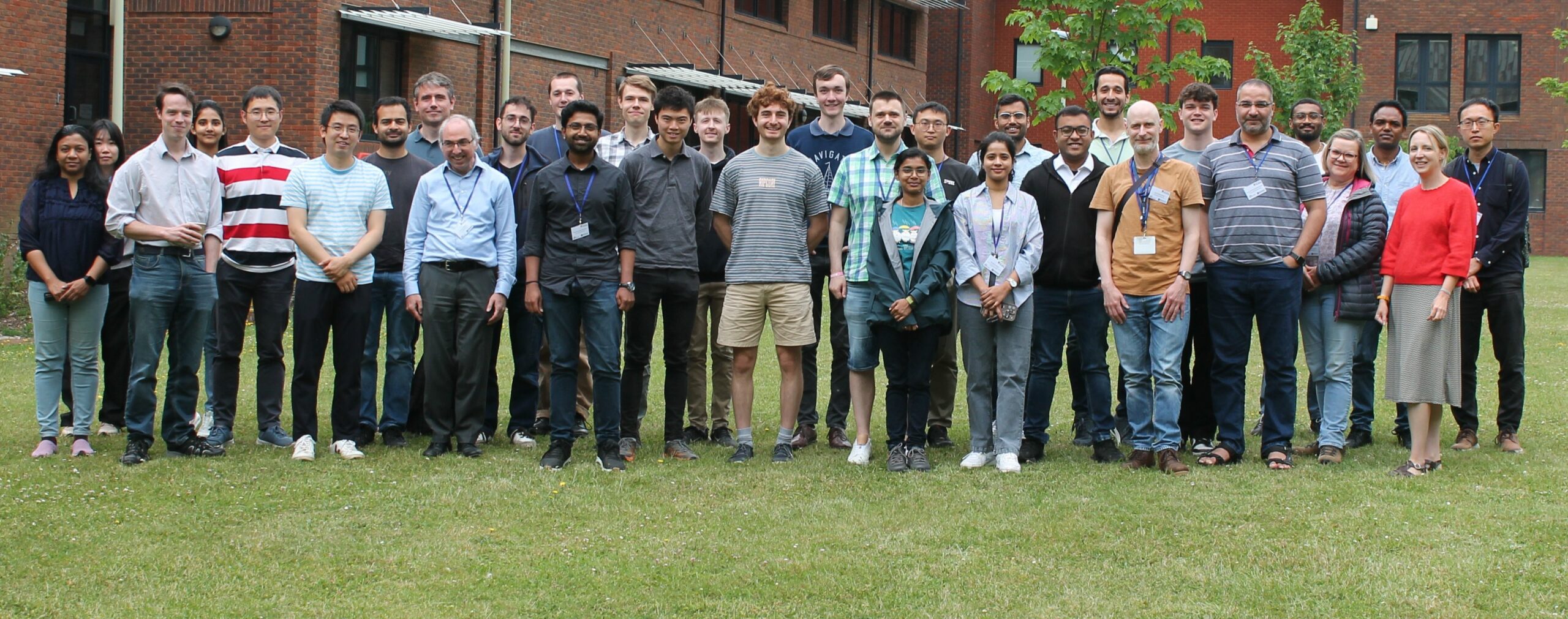
Our recent NERC/NCEO/DARC Training course on data assimilation and its interface with machine learning took place from 9-13 June 2025 at the University of Reading and online. It was wonderful to see over 50 people from more than 10 countries come together for the course!
Course objectives
Each year, the National Centre for Earth Observation (NCEO) and the Data Assimilation Research Centre (DARC) at the University of Reading offer in-person training on data assimilation. This intensive, week-long course introduces commonly used data assimilation algorithms within a unified theoretical framework and explores the strengths and limitations of each algorithm.
The 2025 course placed special emphasis on the growing synergy between data assimilation and machine learning and introduced the Joint Effort for Data assimilation Integration (JEDI) framework for practical sessions.
Key topics covered
- Fundamentals of data assimilation
- Reanalysis
- Variational and ensemble-based methods
- Machine learning applications in data assimilation
- Beyond Gaussian assumptions
Lectures were paired with practical sessions, giving participants the opportunity to apply and explore theoretical concepts directly.
Participant reflections
We were impressed by the talent, enthusiasm, and engagement of our participants. We are also delighted that they enjoyed the course and found it useful. Here is what they said:
“As a beginner in Data Assimilation (DA), I found the foundation course extremely helpful. While it may take me some time to fully grasp the advanced lectures, this course provided a clear and complete picture of the DA framework. Thank you for covering the topics and for providing such comprehensive materials.”
“The structure was really successful with a great mixture of theory, practicals and applications lectures. The practicals in particular were really helpful to embed the theory and very well prepared since everything worked first time. On the social/networking side, having one lunch at Eat at the Square was a good idea to break up the week. The weather helped make course dinner a great, outdoor success.”
“It was a very useful course, and I’m glad to have participated and gained valuable insights. Thanks to the entire team of organizers for conducting it so smoothly. Even though it was [also] held online, they ensured full engagement, especially during the practical sessions. Looking forward to future such courses.”
“Thank you Alison, Amos and Ross (and all other speakers) for putting on such a fantastic course. After this past week, I feel like my knowledge and understanding of DA has been consolidated significantly, and that many of the gaps I had through reading literature have been filled.”
We are grateful for all the feedback we received, which will help us continue to improve the course—as we have done year after year for over a decade.
A big thank you to everyone
We have so many thanks in our hearts. Without the funding from Natural Environment Research Council (NERC), we would not be able to support participant travel and accommodation and introduce JEDI-based experiments. Without our lecturers and demonstrators, we would not be able to deliver such a comprehensive course. Special thanks go to David Ford, Chris Thomas, and Jo Waller from the Met Office, and to Alan Geer from the European Centre for Medium-Range Weather Forecasts (ECMWF). Without the ideas of people from the Met Office and technical support of Maria Broadbridge from Digital Technology Services, the JEDI-based experiments would not have been possible.
Most importantly, without all participants, the course would not have been meaningful. Data assimilation is a growing field, and it needs many people like you. We look forward to continuing this journey with you!


