
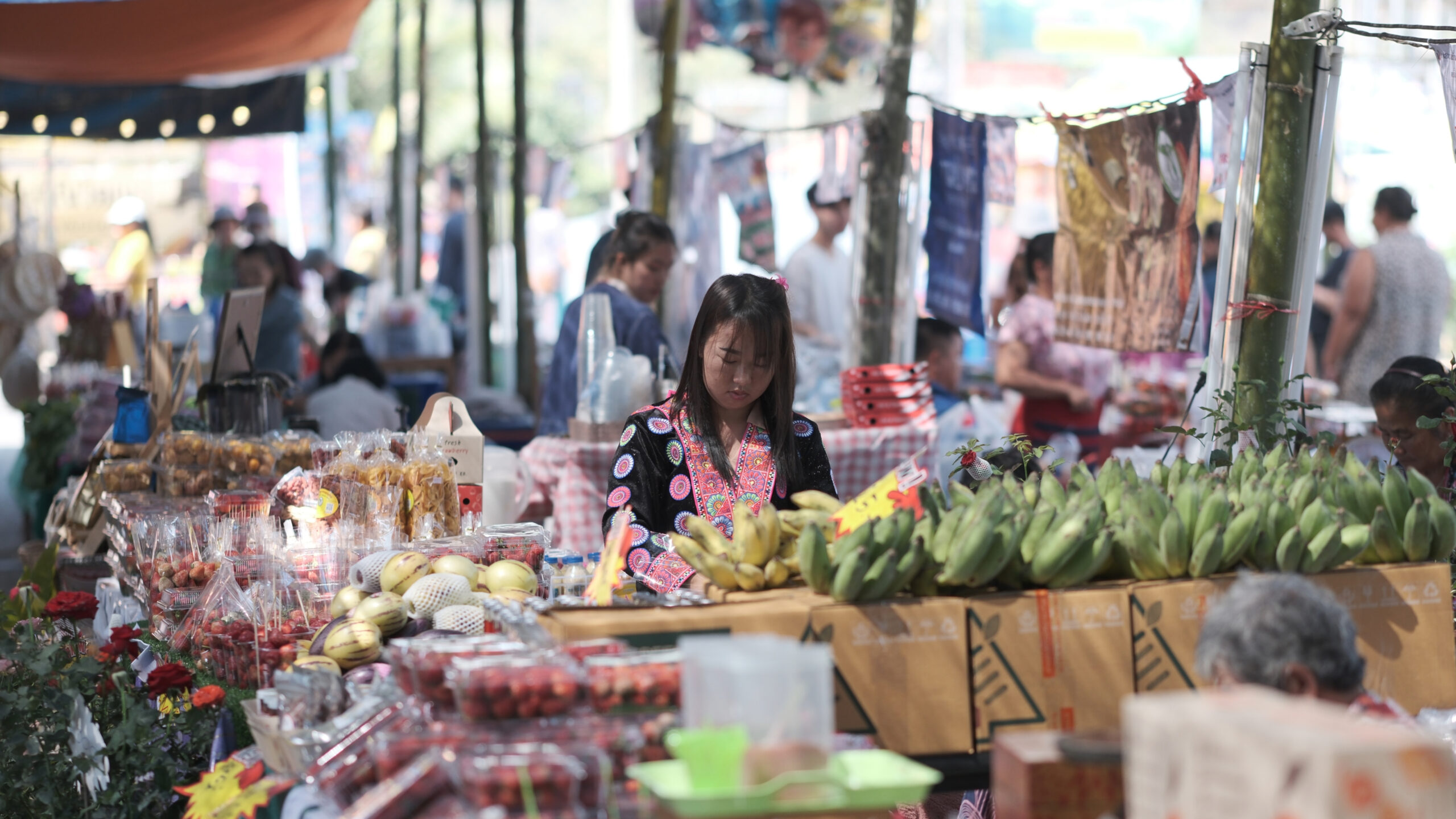
Researchers at the University of Reading partnered with universities and institutions in Thailand and Laos to understand how households use food markets and make food choices. Greater market engagement undermines nutrition in distinct ways: creating “food deserts” lacking healthy options in Thailand, and “food swamps” dominated by processed foods in Laos. Evidence now drives targeted interventions in both countries, which are at different stages of economic development and require different approaches.
What we did
Between 2020-2022, researchers from the University of Reading, Chiang Mai University, and Laos’s Institute for Research on Development developed an innovative measurement tool: the Index of Household Interaction with External Food Environments. This interdisciplinary partnership brought together expertise in food economics, nutrition, anthropology, and local cultural knowledge to address a critical gap in food policy research.
Previous approaches simply mapped where food shops were located. This project went further, measuring how households actually engage with available food markets, tracking the diversity of outlets used, the range of products purchased, and the intensity of market reliance versus other food sources like home production. During 2023, researchers collected comprehensive data from 408 people across eight rural and peri-urban communities in Thailand and Laos. The team recorded 5,331 person-days of dietary intake, surveyed 265 food outlets, and conducted focus group discussions to understand cultural and social factors shaping food choices. This multi-method approach created an unprecedented picture of how households navigate their food environments across different seasons and contexts.
Key findings
The research challenged a fundamental assumption: more food shops does not mean healthier eating. The impact depends on what markets sell and how communities experience them.
In Thailand, greater market access reduced consumption of traditional healthy foods. Communities described how market expansion eroded practices like home gardening, foraging, and food sharing. Markets existed, but nutritious traditional options grew scarce—creating “food deserts.”
In Laos, increased market engagement drove higher consumption of processed snacks and sugary drinks. Participants described markets “flooded” with cheap ultra-processed products. This created “food swamps” where unhealthy options dominated.
The research also captured stark patterns by gender and ethnicity. Men accessed wider food outlets and ate out regularly, while women relied more on home cooking and neighbourhood food exchange. Ethnic minorities faced particularly constrained movement in urban food environments, shopping only within familiar areas.
Why this matters for policy
These findings inform how local governments approach nutrition policy. More shops or improved roads to markets are not enough to improve nutrition. Policymakers must also make sure markets stock affordable healthy food.
The research provides evidence for context-specific interventions. In Thailand, where market integration displaces traditional diets, policies could protect traditional food practices, support home gardens and community food networks, and improve the availability of nutrient-dense foods in markets. In Laos, where ultra-processed foods dominate expanding markets, regulatory options include taxing sugary drinks, requiring clear nutrition labels, restricting junk food advertising to children, and supporting local farmers to supply fresh produce.
Both countries could benefit from gender-sensitive approaches that recognise women’s central role in household food decisions yet acknowledge their more constrained access to diverse food outlets. Policies addressing ethnic minorities’ experiences of food environments could reduce inequitable exclusion.
Photo: Marco Haenssgen