

By Dr M Advent botany couldn’t be advent botany without botanists – and amongst them are a number of significant “advent botanists”, those born in the days of advent and…Read More >
#AdventBotany
Advent Botany 2016 – Day 11: The beauty of snowflakes microscopic algae
By Isabelle Charmantier Ah, the snowflake: symbol of short winter days, crisp frosty mornings, Carol singing under the stars and the Christmas season. However, this is not a snowflake. It…Read More >
Advent Botany 2016 – Day 6: Yew know it’s Christmas
By Niki Simpson The traditional Christmas tree here in the UK is the Norway spruce, Picea abies, while Abies nordmanniana is increasingly sold as the expensive “non-drop” Nordmann fir. However,…Read More >
Advent Botany 2016 – Day 4: The Carrot
My dog’s got no nose. How does he smell? Awful. To prevent olfactory problems with snowmen the traditional nose of choice is the carrot. To most westerners, the carrot is…Read More >
#AdventBotany 2016 – Day 2: How do you create a Candy Cane Chrysanthemum?
By Dawn Bazely Peppermint candy canes are the North American equivalent of traditional British seaside rock. They are ubiquitous during the holiday season in Canada and the USA, showing up everywhere…Read More >
Advent Botany 2015 – Day 8 – Wassailing
By Yvette Harvey and Maria Christodoulou After last year’s relatively well behaved advent plants, it is time for the more obscure and yet omnipresent ingredients of a good Christmas. Time…Read More >
AdventBotany 2015 – Day 2: Yule Log – a carbon neutral heat source?
By Alastair Culham The Yule log was traditionally a large branch, trunk or whole tree brought indoors to burn slowly over the Christmas period and in to the New Year. …Read More >
Advent Botany 2015, Day1: Balsam Fir – a popular Christmas tree in Canada
By Dawn Bazely Much of Canada’s landmass is dominated by the boreal forest ecosystem. The characteristic tree species of the boreal biome are conifers such as pines, firs and spruces. Another boreal evergreen…Read More >
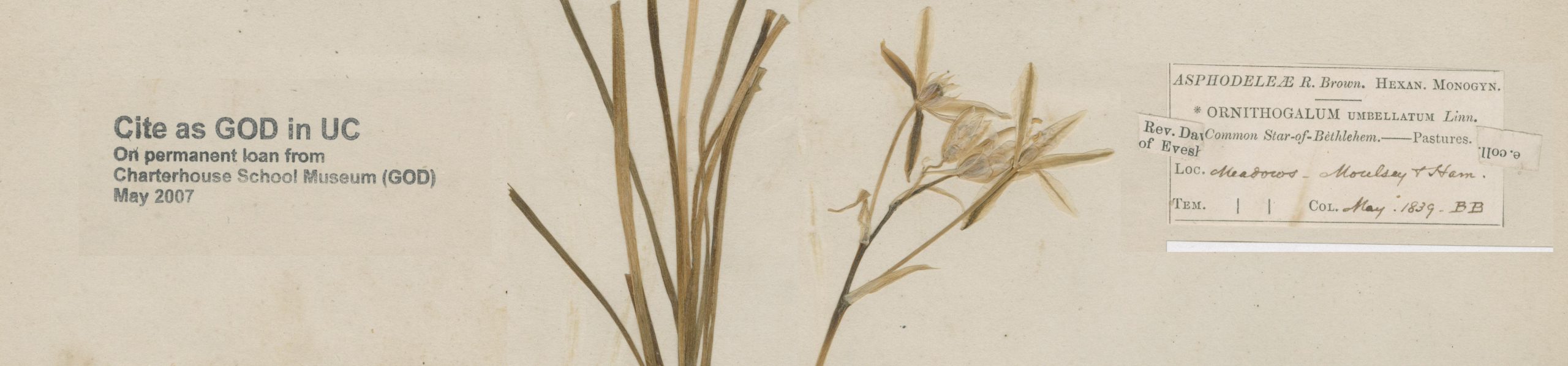
2014 Advent Botany – Christmas Day – The Star of Bethlehem from GOD
The Star of Bethlehem guided the Magi from the east to the stable in which Jesus lay. This classic part of the Christmas story has given rise to the star…Read More >
2014 Advent Botany – Day 23 – Poinsettia (Euphorbia pulcherrima)
The supermarkets in the UK currently have shelves full of Poinsettia (Euphorbia pulcherrima) with the distinctive bright red bracts, but poinsettia production is a risky business with high fuel costs…Read More >