
New academic year and new PhD students join DARC at University of Reading. Read on about their background and their topic of research
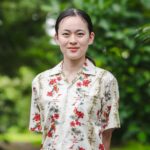 Maori Inagawa is a first year PhD student at Department of Mathematics, University of Reading. As a PhD project, she has started working on machine learning approaches in Bayesian and Ensemble Data Assimilation under supervision of Dr Eviatar Bach (UoR & National Centre for Earth Observation). She is a part of Mathematics for Future Climate Central Doctoral Training (MFC CDT) program. MFC CDT is a joint initiative run with the University of Reading, Imperial College London, and the University of Southampton, and she is a part of a cohort of 18 PhD students focusing on mathematics related to climate change.
She finished master’s degree at Keio University, Japan. During MSc in Japan, she majored in Statistics, focusing on models that predict things across space and time (known as Spatiotemporal models), specifically using a technique called the Gaussian Process. She found spatiotemporal data interesting and was attracted to it because they have non-independent and identically distributed structure and are large in scale! In her master’s thesis, she proposed a new metric that simultaneously considers geospatial distance and contextual similarity, which derives from features such as natural environments and social factors. Using this metric, she constructed an extended model of NN-GLS (Zhan et al., 2025), where a neighbourhood structure reflecting both physical and feature-based distances was introduced. Driven by a lifelong passion for both Mathematics and Environmental issues, and passionate about studying mathematical modelling for climate prediction, she looks forward to exploring Data Assimilation at Reading University. So far, she enjoys her time in Reading, surrounded by the nature on campus which she loves.

Tom Hill holds an integrated master’s degree in Earth Sciences (Geology) from the University of Oxford. His master’s research was on projections of sea-ice-motion-induced freshwater redistribution and the effects of this on subpolar North Atlantic water column stability. He also completed a field-/lab-based placement in coastal oceanography at the University of Plymouth.
Since 2022, Tom has worked in atmospheric data assimilation at the Met Office. The Met Office’s next-generation global system will use the LFRic forecast model and the JEDI (Joint Effort for Data assimilation Integration) framework. The tangent linear model and adjoint of this incremental 4D-Var system will be a hybrid of two components. Tom works on both: the coded dynamics component within LFRic and the ensemble-derived physics component within JEDI.
Tom will be studying for a PhD part-time alongside his current work, with supervisors Amos Lawless, Nancy Nichols and Yumeng Chen (DARC), Jo Waller and Dan Lea (Met Office) and Tsz Yan Leung (ECMWF). His aim is to investigate stronger coupling of atmospheric and oceanic data assimilation systems via the observation operator. Certain observations are sensitive to both the atmospheric and oceanic states, so this approach is expected to extract more information from such observations by representing the physical relationships more completely.
Gilbert Jesse is an AFESP-DTP PhD student at the University of Reading, based in the Data Assimilation Research Centre. He holds an MPhil in Meteorology and Climate Science from the Kwame Nkrumah University of Science and Technology, Ghana. His earlier research focused on applying machine learning for bias correction of large-scale climate models and modelling climate variability using downscaled climate projections. This work led to the development of Ghana’s first groundwater database under the Rapid Assessment of Groundwater Availability (RAGA) project.
His PhD project title is “Large ensembles of machine learning forecasts for advanced nonlinear filters in atmospheric data assimilation”. Convective-scale atmospheric processes are highly nonlinear, yet most operational data assimilation systems still assume linearity and Gaussian error distributions. In practice, these assumptions limit forecast accuracy during fast-evolving weather. For example, during the London floods of July 2021, forecast models indicated a general risk of thunderstorms but underestimated the local intensity and timing of rainfall. More than 40 millimetres of rain fell within an hour, flooding roads, homes, and transport networks. Such events reveal how conventional Gaussian-based methods struggle to represent rapid error growth in convective systems. Gilbert’s research explores how machine learning ensembles, with their growing forecast skill and lower computational cost, can make advanced nonlinear filters such as particle filters feasible for operational atmospheric applications.
The project will progress from simplified models to near-operational experiments, including collaboration with the European Centre for Medium-Range Weather Forecasts. Gilbert will be supervised by Dr. Eviatar Bach, Prof. Sarah L. Dance and Prof. Amos Lawless, working across the Departments of Meteorology and Mathematics & Statistics and the National Centre for Earth Observation.


